What’s up, Doc?
Leo Varadkar was a paradox, the quintessential Tory Boy who oversaw massive increases in welfare spending. His sudden, unexpected departure from politics only adds to his enigma.
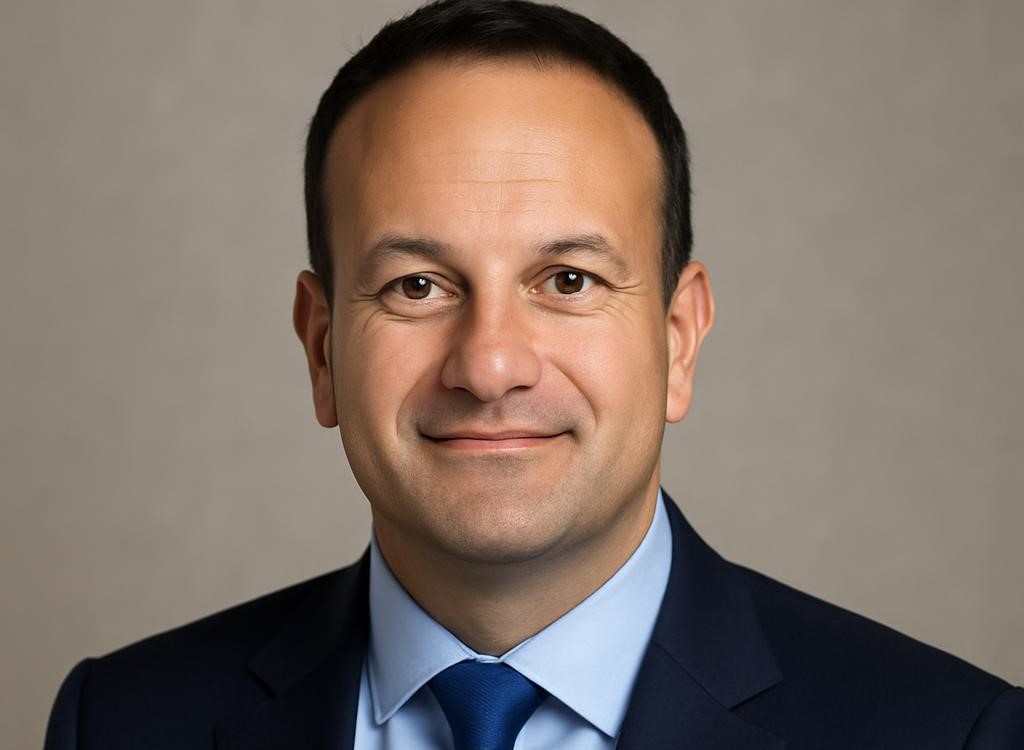
Speaking My Mind, by Leo Varadkar, Sandycove, 432 pp, €24.99, ISBN: 978-1844886937
In Speaking My Mind, Leo Varadkar observes Enda Kenny as ‘someone you could work with closely, while never really getting to know him’. The same has been said of all the last ten taoisigh, except maybe Albert Reynolds and Brian Cowen. The question for this book would be whether it would allow us to get to know the real Leo Varadkar.
Varadkar was a paradox, the quintessential Tory Boy who oversaw massive increases in welfare spending. He was the young conservative who would cheer on, though not lead, a shift to social liberalism. The pro-market politician who piled regulations on employers. The closeted gay man who was initially opposed to same-sex marriage. Though a book finished a little over a year after he left office hardly promises much self-reflection, the manner of his leaving office showed a man who was reflective and open to self-criticism.
He told the country in March 2024 that he thought that ‘this Government can be re-elected. I believe my party, Fine Gael, can gain seats in the next Dáil … After careful consideration and some soul-searching, I believe a new Taoiseach will be better-placed than me to achieve that – to renew and strengthen the top team, to refocus our message and policies, and to drive implementation. After seven years in office, I am no longer the best person for that job.’
But the blurb at the back of Speaking My Mind has Varadkar ask ‘I was the youngest Taoiseach ever. Was I too young? How long would I last? Would I fail and be the shortest serving Taoiseach?’ These questions are the wrong questions. These are questions to which we already know the answer.
Had he asked ‘what was my vision for Ireland?’, and ‘would I succeed in transforming Ireland?’, Varadkar would have had to set that out and defend his choices. He could have told the story of how he achieved or failed, what got in his way. Was it his failings, or did he overreach?
Instead we get the type of history Arnold Toynbee disliked so much – just one damned thing after another. He tells the outlines of the various crises he faced, especially as minister for health. But he never gives any individual episode enough time or space to get a sense of policy-making and how failures or successes are arrived at.
At one stage we think we are going to get that analysis: ‘[As] Minister for Health I became increasingly stressed. I wanted to make everything better all of the time, but I could only make some things better some of the time.’ Cue a discussion of the pressures on ministers and the limits of government? No. Instead Varadkar says ‘I reacted as I usually do, by overeating. I started to gain weight again. Not as much as before, but enough.’ OK, so what?
He goes on to say that ‘while the crises were continuous, I’m proud of some of my achievements.’ And then a long list. But no effort to either defend that these were in fact achievements – for instance it is questionable whether free GP care for children under six doesn’t just clog up GP surgeries with anxious parents.
He is aware enough to observe that as minister for health he sponsored legislation to restrict alcohol sales and promotion, including a ban on drinks companies sponsoring sporting events, legislation that he had earlier opposed as minister for sport. He observes that when you adopt a new law, you actually adopt two – the law itself and the law of unintended consequences. Again the reader would like him to drill into this observation – but it is left hanging.
Brexit inevitably takes up much of the book. Varadkar sees his response to it as one of his big achievements. But much of the work bringing other EU countries on board was done by Enda Kenny, and in the subsequent negotiations we see Varadkar as a member of the audience – albeit one with a better view of the show and backstage access. Still he was just waiting to see what was acceptable to London, and how the team in Brussels reacted.
For Varadkar Brexit was important because it would determine when he could call an election. After Micheál Martin declared that Fianna Fáil would continue its confidence-and-supply arrangement, whereby it supported the minority Fine Gael government on essential votes in return for some input into policy-making, because he did not want an election until Brexit was sorted, Leo Varadkar couldn’t really cut and run. So he was waiting for a deal before he could call the election he wanted.
An earlier opportunity for that election might have been presented in 2018 when tánaiste Frances Fitzgerald was under pressure for her alleged treatment of Maurice McCabe, the Garda whistleblower. Varadkar was convinced that Fitzgerald had done nothing wrong and was being badly treated by the opposition, including Fianna Fáil. He promised Fitzgerald his full support. Why not call Martin’s bluff? Or have an election that would give him a chance to seek his own mandate. If he was the electoral asset he thought he was, it seemed like a good option, and he could show loyalty to an ally – indeed his own mentor.
Instead he accepted Fitzgerald’s offer of resignation. He could have seen that she was not effective in shutting down the issue in her responses. But she might be seen as one of a litany of one-time allies he cast aside when they were no longer useful. It is striking how many Fine Gael people he says he is no longer on good terms with.
Varadkar is not self-pitying in the way that some other former taoisigh emerged from their autobiographies. He acknowledges that media criticism is ‘not personal’ even if he thinks some was unfair. He was right to think it unfair when he was targeted by accusations of ‘leaking’ a document to an acquaintance. It was ridiculous to suggest that a taoiseach cannot share documents in the pursuit of a policy goal, but the gardaí allowed the matter to drag on for far longer than it should have. Had he been charged, he had decided he would resign. Other criticism, such as attending Katherine Zappone’s party at the Merrion Hotel, was more reasonable, though hardly a resigning matter, something he briefly considered. This cued up thoughts of his exit: ‘It’ll be on my own terms.’
Because political lives are carried out in public view, the point of the political memoir is to get some insight into the private person or insider observations one wouldn’t normally see. We are given Varadkar’s brief impressions of politicians he comes across: Michel Barnier ‘old-fashioned manners’, Nigel Farage ‘such good company!’, Pope Francis ‘relaxed and casual’, Simon Harris ‘impetuous and ambitious’, Tony Holohan ‘intelligent, refined and quite arrogant’, Alan Kelly ‘possibly even more arrogant than me’, Angela Merkel ‘understated and restrained’, Liz Truss ‘the most eccentric of them all’.
But Varadkar is an intensely private person, and he wasn’t going to do a reveal-all about himself. So we are left with titbits about his inner life. He is honest about himself – he recognises that he is arrogant, and that he is slow to warm to people, but he sees himself as immune to sycophancy.
At times it is revelatory: that he was hoping that the Greens would reject the coalition deal in 2020 so that he could call an election, which might give him a personal mandate to govern. He claims credit for things and wants to claim that he was an electorally successful leader – something that the facts do not bear out. But in general he is capable of self-criticism and sees many failings in his election campaign in 2020. Often he admits to errors: ‘What I should have said was … but instead I said …’
It is revealing that he thinks he was wrong when he said in his interview with Miriam O’Callaghan to announce publicly that he was gay that he did not see himself or want to be seen as a ‘gay politician’ or a ‘half-Indian politician’, but clearly coming out changed him.
He wonders whether he ‘truly believed that being gay wouldn’t be central to my being and my future?’ Varadkar acknowledges that his politics shifted, and it was almost certainly his coming out that changed him. He became an icon of Ireland’s liberalism – albeit mainly outside Ireland. It was his gayness that interested international media, and he leaned into that.
Power is meant to reveal. We see the true person when they wield power, because now they have choices and those choices show who they truly are. His relatively short stints in power might indeed reveal something.
Leo Varadkar notes that he changed as a politician over time. He said that early in his career, he ‘not only presented as but genuinely was a social conservative’. By the time abortion was put back on the political agenda by the death of Savita Halappanavar in 2012 his views ‘were trending towards the more liberal end of the … spectrum’.
When he became Fine Gael leader and taoiseach, Varadkar spoke of making Ireland a ‘Republic of Opportunity’. Was this going to be an indication of his political philosophy? What did it mean, if anything? Or was it just a neat line in the business of selling Leo?
He shifted to the left, becoming an enthusiastic champion of the ‘stakeholder state’, where the demands of those in ‘progressive’ organisations, such as the National Women’s Council are listened to and prioritised over those of ordinary citizens. Spending went up. Some of this was necessitated by crises, for instance Covid-19, but when the so-called cost-of-living crisis hit, the response was to increase direct payments to people rather than try to deal with the underlying causes of high prices.
He argues that it was difficult for him to do what he wanted. He was beholden to Fianna Fáil in both his governments. But there is no general discussion of the constraints he faced. He does say that on occasions he was slowed down by Micheál Martin’s innate caution and conservatism. But maybe the problem was that Varadkar wasn’t really sure what he stood for himself.
It is hard to see him as an instinctive liberal. Too often his response to things was more government, more regulation. Rather he seems to be an instinctive technocrat, believing that there is a right answer if only the smart guys can figure it out.
The impression the reader gets is of someone who was in it for the chase. One of the chapters is called ‘Eye on the Prize’; it might have been the title of the book. He would disagree, but Varadkar doesn’t seem to have had any strongly held principles or ideas. As a teenager politics was his hobby – one he turned out to be better at than anyone would have predicted. But his interest seems to have been in playing politics, not in doing something.
Throughout the book he notes his intense desire to become taoiseach: ‘… if I really wanted to be Taoiseach, I needed to get this [coming out] over with’. ‘This [becoming taoiseach] was what I had wanted all my life.’ But once there he gives the impression of a person who was always thinking about how others viewed him – not someone comfortable in his own skin. He tries to reassure us that he was a consequential taoiseach, but at times the insistence sounds desperate: ‘History was being made and I was at the centre of it.’ Like a dog chasing a car, he didn’t really know what to do when he caught up with it. So much of the latter part of his book regularly refers to how he might get out of politics. He clearly wasn’t enjoying it. As early as 2020, just back in office, he was preparing for his exit ‘if for some reason I didn’t, or couldn’t, run again.’
He saw he had changed. His priorities had changed. He wanted to have a normal life. Politics was no longer all-consuming.
So maybe Speaking my Mind does reveal the real Leo Varadkar. Not the consequential taoiseach he wants to be known as, but the man who rose fast, found himself and disappeared.
Donate ← Back to the current issue