Virginia Woolf’s juvenilia
‘The Life of Violet’ brings together three interconnected short stories, written by Virginia Woolf at 25, that reveal her beginning to think about something she would return to throughout her career: how to tell the story of a woman’s life.
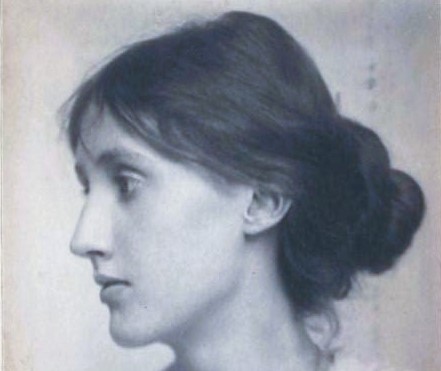
The Life of Violet: Three Early Stories, by Virginia Woolf, Princeton University press, 144 pp, £16.99, ISBN: 978-0691263137
In my final year at university, while I was writing my thesis on Virginia Woolf, I went to stay with a cousin in London. His accommodation was on Tavistock Square, and when I arrived he told me he had something to show me, something he thought I’d appreciate. It was a video montage he’d put together, shot at night from his window. The footage was grainy, dark, and taken from some distance, but what it showed was unmistakable: a succession of men pissing on the head of Virginia Woolf.
He had noticed that around the time the pubs closed, it wasn’t unusual for men to wander into the small enclosure of greenery on the square to relieve themselves. Rather than choosing a tree or a discreet corner, many seemed unable to resist the temptation to urinate directly onto the commemorative bust of the great Modernist writer. My cousin isn’t especially arty or feminist, which made his instinct to document the scene all the more compelling. I had forgotten all about it until I sat down to write this essay on the posthumous publication of some newly discovered writing by Woolf. I return to it now as a way of framing a few thoughts on the writer and her strange, accidental afterlives.
To begin with, Woolf’s own thoughts about legacy and her humorous resistance to solemnity emerge most clearly in her response to the writings of her father, Leslie Stephen, the renowned Victorian critic, biographer and historian. In his Dictionary of National Biography, he argued for the inclusion of a final chapter on the ‘Forgotten Benefactors’ of history. In this section, he argues that nothing ‘helps one more than a vivid and enduring consciousness of the enormous debt which we owe to men and women who lived in obscurity, who never had a thought of emerging out of obscurity, and whose ennobling influence has yet become a part of every higher principle of action in ourselves’.
His claim that obscurity is ‘by no means an altogether unpleasant condition’, which those who labour under ‘never had a thought of emerging out of’ contains a particular blend of condescension and sentimentality which Woolf brilliantly parodies: ‘It is one of the attractions of the unknown, their multitude, their vastness; for, instead of keeping their identity separate, as remarkable people do, they seem to merge into one another.’ She spotted the logical fallacy in her father’s argument and was merciless. How can you assume that individual lives were completely unremarkable only because there is no documentary evidence of them available to you? Of course, many of those swallowed up in obscurity were women. As Rhoda says in The Waves: ‘silence closes over our transient passage’.
Throughout her career, Woolf urged women to keep records of their lives, writing to the composer and suffragette Ethel Smyth in 1934, ‘please I beg of you, devote yourself to memoir writing for posterity … This I consider your most sacred duty.’ Her own diaries demonstrate a desire to record the evanescent, domestic details of everyday life: the people who visited, the money spent, the meals cooked and eaten, and the weather outside. In A Room of One’s Own, she protests against ‘the novelist’s convention not to mention soup and salmon and ducklings, as if soup and salmon and ducklings were of no importance whatsoever’ and proceeds to defy that convention by describing her lunch.
The Life of Violet brings together three interconnected short stories written by Woolf in 1907, at the age of twenty-five. They show her beginning to think about something she would return to throughout her career: how to tell the story of a woman’s life. Together, the stories form a spirited, lively mock-biography of her friend Violet Dickinson, a woman famous and beloved in Woolf’s aristocratic circles for her height (6ft 2in) and the humour and kindness she lavished on her friends. She was, from all documentary evidence, a remarkably nice woman, whom Woolf was infatuated with for a time.
The first story, ‘Friendships Gallery’, is a wry, fantastical potted biography, beginning with the birth of Violet, ‘the Giantess’, into a conventional Christian household. It traces her unstoppable growth into young womanhood, culminating in her first dance – though before she goes, her pious aunt issues a cautionary reminder: ‘You are neither beautiful nor wealthy, nor, for anything I can see, in any way attractive; God in his infinite goodness has caused you to grow at least six inches higher than you should grow, and if you are not to be a Maypole of Derision you must see to it that you are a Beacon of Godliness.’
Later, her dance partner good-humoredly inquires why she wears a heavy gold cross around her neck to a ball. She responds, with delightful candor, ‘Because I am so ugly, John.’ Both erupt into laughter. Woolf then skips lightly along the years, offering sly metafictional asides:
‘The day after the ball is always used by sentimental novelists for an effective contrast …’
‘From this bald and hasty paragraph a person of discrimination will construct whole chapters which I have no time to write out.’
‘Now here again it would be possible to enter into one of those intricate labyrinths of analysis which, as modern novelists expound them, turn human hearts and brains into so many honey-combs of coral.’
Through these digressions, Woolf wryly mocks the demands of narrative itself. The gesture is cleverly evasive: she satirises the novelistic conventions that, however awkwardly, make a story move, without offering an alternative. The result is a piece that has plenty of charm but feels quite static.
The second story, ‘The Magic Garden’, is even more whimsical and digressive. It opens with a languorous vision of noble English ladies at tea:
‘gigantic women, lying like Greek marbles in easy chairs, draped, so that the wind bared little gleaming spaces on their shoulders, who laughed as they helped themselves to strawberries and cream …’
Violet, meanwhile, has ‘no mind for any form of narrative poetry’ as she sits among ancient oak trees and ‘the finest Elizabethan grey stone’. She is presented as a different kind of woman – one oriented toward the future rather than the past, and preoccupied above all with her freedom.
This precise configuration of images and ideas is one Woolf would return to some twenty years later in the opening of Orlando (1928) – the high point of her experiments in New Biography – written, of course, about Vita Sackville-West, who would come to eclipse Violet in Woolf’s affections and her literary imagination. Orlando, like this early story, is a love letter, a form of seduction. (It is striking that when Woolf wished to woo someone, she did so by writing them a teasing mock-biography.) But where Orlando is carefully designed to be consumed not only by its beloved subject but by a wide readership, ‘The Magic Garden’ feels closer to a private joke, one that repeatedly shuts the reader out. At one point, Woolf concedes as much:
‘If no one sees the connection I am not surprised, but it would really take too much time to fish the links from the sliding waters of Irish grandmothers and education and religion which in Violet’s mind they lie submerged.’
The third and final work in the collection, ‘A Story to Make You Sleep’, is a tender, playful fantasia set in an imagined ancient Japan. It begins like a fairy tale:
‘Once upon a time, my child, before you were born, a great sea monster with smooth sides gleaming like silver, swam up into the harbour and lay gasping on the sands.’
The townspeople gather to perform rituals; evil spirits escape the monster’s body in the form of little black devils, round as dried peas. A crow floats above them, caws twice, and then flies slowly overhead in a straight line, allowing the townspeople to follow it to the most beautiful city in the world—where it must promptly be driven away, lest the city turn into a mountain of snakes.
A giantess with magical healing powers then appears and performs miraculous deeds.
‘By night she caught moon-drops and wove them into fine chains of silver which never broke.’
As an act of worship, the townspeople allow her to watch their babies bathing – an extraordinary honour, since, as Woolf explains, ‘Nor would mothers permit bad people or ugly people or stupid people to see their children naked, for it was thought then that all qualities were of the nature of little grains, which penetrated the skin and took root and blossomed in the blood.’
The story contains the seeds of what would become Woolf’s greatest artistic strength: her courage to pursue dream-images wherever they lead, however strange, as they shift and mutate in the imagination. Yet here the images aren’t tied to the concrete details of life, so the reverie feels a little luxuriant, too diffuse, and I admit I found my attention drifting. It ends with a gently comic line: ‘Indeed the child had been asleep these two hours … and the mother was ready to sleep too.’ It is difficult to know whether this is meant to lull the reader or to register, with a flicker of self-defensive awareness, that Woolf may have bored us and herself.
In short, and without meaning to sound condescending, The Life of Violet showcases Woolf’s great personal charm, her lively imagination and her wit, but there’s nothing in these stories to indicate the full magnitude of what was to come. Evidence suggests that Woolf herself regarded them as early, somewhat embarrassing experiments – scribblings to amuse friends – and would not have wanted them published. The primary proof is that she never sought to publish them herself. She also cautioned, ‘For heaven’s sake, publish nothing before you are thirty!’ Leonard, her husband and lifelong champion, called the stories ‘a kind of private joke, and not very good’. This seems, to me, a clear-sighted assessment.
Woolf scholar Urmila Seshagiri discovered a revised typescript of these stories from 1908 that had sat in the archives of Longleat House for decades. She argues that this amended and refined version is proof Woolf took the stories more seriously than anyone had imagined, and that the three pieces are aesthetically refined, complete works. Her rapturous preface begins: ‘Reader! Can Virginia Woolf make us burst out laughing?’
I do think she can, but not necessarily in these stories. However, it’s easy to understand Seshagiri’s enthusiasm: every scholar probably dreams of finding a dusty, never-before-seen manuscript by a great deceased author. It is an exciting publication, but probably only for Woolf scholars.
What’s curious is the way the book has been presented. The stories appear in a stylish, consumer-ready floral hardback edition, released with significant excitement, with all the big papers announcing a major new literary discovery. There was even a long article in Vogue Spain about the publication. And a bizarre encouragement from Seshagiri:
‘Whether you are familiar with Woolf’s novels or have yet to encounter her writing, I hope the small, well-formed stories in The Life of Violet will please you. Their riotous plots speak to readers of all ages.’
The idea that these stories, which she can only earnestly praise as small and well-formed, might serve as an introduction to Woolf, rather than a work of niche scholarly interest, is a curious suggestion.
What is striking about The Life of Violet is the tension between the stories’ intimate, private nature and their polished, commercially appealing presentation. These are works born of friendship, youthful curiosity, and playful experimentation – small, personal amusements rather than fully developed literary projects. Yet they have been brought to public attention with the trappings of a major literary discovery, marketed as if they were representative of Woolf at her best. Recent years have seen a marked appetite for early, private, or unfinished writing by canonical women authors (Sylvia Plath, Joan Didion), often valued for its emotional immediacy. It is notable how readily these early experiments lend themselves to forms of literary packaging that are currently commercially viable.
None of this is to suggest that Woolf’s legacy requires protection, or that such material should remain unseen. Once an author is dead, their work inevitably enters a cultural economy they can no longer shape, and new readers will encounter it in ways that reflect the moment of publication as much as the moment of composition. What feels worth noticing here is how decisively contemporary tastes – toward intimacy, vulnerability, and the promise of emotional access – shape the terms on which that encounter takes place.
Donate ← Back to the current issue