Joyce and Parnell
A large and ambitious attempt to shed new light on Joyce's work fails to convince.
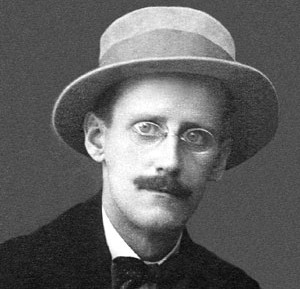
James Joyce: A Political Life, by Frank Callanan, Princeton University Press, 909 pp, €44, ISBN: 978 0691227979
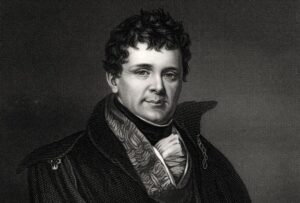
In 1912, WB Yeats described Charles Stewart Parnell as ‘that lonely and haughty person below whose tragic shadow we of modern Ireland began to write’. Accepting his Nobel Prize eleven years later, Yeats again proposed that modern Irish literature, together with ‘all that stir of thought which prepared for the Anglo-Irish War, began when Parnell fell from power in 1891. A disillusioned and embittered Ireland turned away from parliamentary politics: an event was conceived and the race began, as I think, to be troubled by that event’s long gestation’.
Yeats may oversimplify matters, but these often-quoted lines remain persuasive. The failure of Parnell’s campaign for Home Rule and the bitter divisions among his Irish supporters that followed the disgrace of their ‘chief’ convinced Yeats and others that Ireland stood in need of cultural and political innovation. He goes on to mention Douglas Hyde’s Gaelic League and his own work with Augusta Gregory in founding the Abbey Theatre. The ‘event’ to which he alludes is presumably the creation of the Irish Free State. This had just come into existence, following the partition of the island, as Yeats received his award in Stockholm. He sometimes offered a qualified tribute, most famously in the poem ‘Easter, 1916’, to the underground, radical movements that plotted the Easter Rebellion, forgoing the constitutional politics of Westminster. However, it is not hard to appreciate why Yeats should have felt regret for Parnell. Indeed, on occasion he is quite explicit about this. The Civil War having re-awoken memories of the Parnellite ‘Split’, he set the memory of this aloof Co Wicklow landlord – one of the Ascendancy elite that Yeats regarded as having supplied the country’s best leaders – against the middle-class Catholics who dominated the new state. ‘Popular Rage’, as he recalls in ‘Parnell’s Funeral’ (1933), ‘dragged this quarry [ie the persecuted Parnell] down’.
The other leading literary Parnellite of the period, James Joyce, born in 1882, was a child at the time of the implosion of the Irish Parliamentary Party that had followed revelations about Parnell’s relationship with Katharine O’Shea, the wife of one of his MPs. Parnell died shortly afterwards, in October 1891. Yet Joyce’s account in A Portrait of the Artist as a Young Man of a family Christmas dinner destroyed by rage and grief in the aftermath of the fall of Parnell stands unsurpassed in Irish fiction as a politically-inspired episode of astonishing intensity. Although he shared Yeats’s disgust at the treatment of Parnell by the Irish Catholic bishops, Joyce had no attachment to the idea of Protestant Ascendancy in Ireland. But it is unclear from his work, including ‘Ivy Day in the Committee Room’, a story from Dubliners, set in the midst of commemorations of Parnell in 1902, whether Joyce believed that any leader of comparable charisma had emerged in Ireland during his lifetime. Nevertheless, some of his observations about the country were recorded in his letters and the memoirs of his friends. He also wrote lectures and essays about Ireland in Trieste between 1907 and 1912. Joyce evidently had a high regard for Authur Griffith, pronouncing (somewhat oddly) that the extra-parliamentary political tactics of his Sinn Féin party, such as economic boycotts, represented a non-violent continuation of nineteenth century Fenianism (‘The Last Fenian’). However idiosyncratic his view of this lineage in Irish politics, it was the one that most commanded Joyce’s attention. Parnell is a sidelined figure in Ulysses. He re-appears in Finnegans Wake, including in lines quoted several times in Frank Callanan’s James Joyce: A Political Life (‘but hunt me the journeyon … amid the semitary of Somnionia’). Here Parnell takes his place among the phantoms of Irish and world history that populate the dreamscape of Joyce’s final work. As in Joyce’s 1912 essay, ‘The Shade of Parnell’, written in (mistaken) anticipation of the final arrival of Home Rule, Parnell is the ghost at the feast for the celebration of a ‘new’ Ireland. Joyce wanted to remind the Irish of their past perfidy and cowardice. Parnell became their victim because he had ‘sinned against the incorruptible chastity that Ireland would demand of any John who would baptise her or any Joan who would liberate her’ (‘James Clarence Mangan’). This ‘extraordinary personality’, while lacking, or so Joyce claimed, ‘forensic gift or original political talent’ (‘The Shade of Parnell’), belongs most importantly for the writer with such heroic but rejected artists as Ibsen, Mangan and Wilde. In Portrait of the Artist Stephen Dedalus, Joyce’s alter-ego, vows to avoid such a fate, deploying the tactics of ‘silence, exile and cunning’.
Most readers and critics would find such an account of Joyce’s view of Parnell uncontroversial. Nevertheless, Callanan, a distinguished barrister as well as a historian of the Parnell era, takes issue, in a remarkably vehement style, with several aspects of the outline above. He proposes the thesis that previous commentators have drastically underestimated Parnell’s importance to Joyce. Callanan begins by telling us that he originally set out to write a study specifically focused on Joyce as a Parnellite. This topic dominates most of the first half of this 900-page, posthumously published work, styled as a ‘political biography’ of the writer. The book, in fact, seems to be rather longer than the Oxford University Press revised edition of Richard Ellmann’s celebrated biography James Joyce. Even so, it extends only to 1915 with additional chapters, for example, on Jewish history in Ireland and a brief section on Finnegans Wake. Callanan states that he had planned a chapter on Joyce’s final novel, concerned with Parnell and Joyce’s father, John Stanislaus. This does not feature here – perhaps it would eventually have been written, if it were not for Callanan’s tragically premature death in 2021. Nevertheless, the structure of the finished work, prepared for publication by friends and fellow scholars, may seem to contradict Callanan’s initial argument about the enduring and inescapable centrality of Parnell to Joyce. Yet other critics such as Ellmann and Seamus Deane are from the outset taken to task for venturing to suggest even a ‘diminution’ in Joyce’s interest in Parnell towards the end of his career. Callanan highlights what he judges to be Ellmann’s ‘aberrant misreading’ in using the phrase ‘Beyond Parnell’ as a section title in The Consciousness of James Joyce (1977). For Callanan (at least for the first half of this book) there is seemingly nothing of importance in Joyce’s mature world view that can be described as ‘Beyond Parnell’.
Callanan’s difficulty is that he adduces insufficient evidence for the case that Joyce’s supposedly life-long ruminations on Parnell’s political ideas, as well as on his character, are crucial to his creative inspiration and development. He indeed suggests that these reflections are often private – even secret. Yet the reader is nevertheless to be persuaded that the most important Irish fictional works of the twentieth century more or less add up to a previously unrecognised commentary on the legacy of Parnell. Ulysses is not discussed in much detail: for example, Callanan offers just a few paragraphs on the ‘Cyclops’ episode in Barney Kiernan’s pub, usually considered crucial for any consideration of Joyce’s portrayal of Irish nationalism. He relies throughout on a good deal of conjecture. Some of this seems to be based on a projection of his own fascination with the ‘Split’ on to the texts (although no one doubts that this period in Ireland had a significant formative influence on Joyce).
The main target of Callanan’s critique of earlier Joyceans is not the idea of a cosmopolitan, ‘apolitical’ writer for whom his Irish origins were no more than an accident of birth. Such an interpretation of Joyce is in any event by now outdated. Rather, Callanan is most hostile to criticism over the last nearly fifty years that has associated Joyce’s experiments with literary form, style and language with the energies of cultural revivalism and insurrectionary nationalism in Ireland from the 1890s to 1922. This encompasses works by Deane and Declan Kiberd, among others. Studies of relevance to a so-called ‘postcolonial’ Joyce since Callanan’s book was drafted include Modernism, Empire, World Literature by Joe Cleary, and James Joyce and the Irish Revolution: the Easter Rising as Modern Event by Luke Gibbons. Such work has also been a stimulus for emerging scholars, including Niall Ó Cuileagáin in James Joyce, Rural Ireland and Modernity: Beyond the Pale.
The sticking point for Callanan is not that such critics align Joyce with aspects of Irish nationalism. He repeatedly asserts that Joyce is an Irish nationalist (although he refused to call himself one). Nevertheless, Callanan does not consider Joyce in relation to – for example – the catastrophes of nineteenth century Irish history (with the exception of the Parnell episode). Nor are the conflicts of twentieth century Ireland evidently of much interest to Joyce, apart from his hope that a secular and ‘modern’ independent Irish state would be achieved. Consequently, in contrast with Joyce’s own books, there seems to be no mention in James Joyce: A Political Life of (say) the Famine or partition. Callanan is primarily concerned that Joyce’s ‘nationalism’ be understood as modelled on Parnell’s parliamentary tactics and aims. This is a strictly delimited matter of ‘high political intellectuality’ (the phrase is repeated), rather than involving inheritance or (God forbid) emotion.
Callanan has two main charges against proponents of a ‘postcolonial’ Joyce. Firstly, he argues that they ignore history (or, rather, ‘historical scholarship’), and that they are ‘reading it in’ – that is, they fit the author out ‘with convictions and intentions of a semi-ideological character without acknowledging the intelligence, and pertinacious elegance of his own negotiation of the ideological that is the glittering intellectual legacy of his schooling in Irish nationalism’. At the same time, we have seen that Callanan’s conceptualisation of Irish history is itself notably incomplete. And while charging that literary critics deploy supposedly ‘abstract’ ideas of imperialism and decolonisation, he himself simply ignores an extensive body of work on the question of Ireland’s relationship to empire. Other crucial terms in his analysis are similarly unexamined. The key notion of the ‘modern’ occurs at a couple of rare points where the implications of Joyce’s putative political vision for Ireland are addressed (Joyce was in favour, apparently). But the term is nowhere adequately defined. By contrast, one might see, for example, Gearóid Ó Tuathaigh’s lucid summary of the ways in which ‘modernity’ has been understood in Irish historical writing in the Summer 2026 issue of this journal. Although he warns against critics who supposedly ascribe their own beliefs to the author, Callanan offers the following fantasy about Joyce rejecting the arguments of those he casts as his critical rivals: ‘One does sometimes read things dogmatically imputing views to Joyce that one knows he would – justifiably on the basis of what he has written – have responded to with a thin smile, a dismissive gleam of his spectacles, or perhaps a light tenor snort.’ No example of such a ‘dogmatically imputed view’ is given. Robert Spoo, in his introduction to this book, notes with approval that in general Callanan is ‘too theoretically restrained’ to invoke ‘overt Freudianism’ in relation to his central case about the impact of the fall of Parnell on Joyce. However, readers may be tempted to reach for a little Freudianism themselves, as Callanan here reveals the extent of his identification with Joyce.
This cameo is all the stranger as Callanan is ruthless throughout in discounting remarks about Joyce made by people who knew him well. One presumes that such witnesses must have had opportunities to, for example, estimate when the gleam of his spectacles was ‘dismissive’ or otherwise. Among these are Constantine Curran, Joyce’s friend at University College Dublin, and his brother Stanislaus – the latter a key confidant in adolescence and over the years when they both lived in Trieste. Of course, it may be perfectly legitimate to disagree with the views of contemporaries about important historical figures. But Stanislaus, who supported his brother financially during his exile and wrote extensively about their early family life, comes in for particularly rough treatment from Callanan. At different points we are told that he ‘struggled to comprehend’ his brother’s politics, having a poor grasp of Irish nationalism; he was ‘grudgingly obtuse’ about Joyce’s Parnellism, and ‘trite’ and ‘obtusely pedantic’ in various other matters. Such (not infrequent) recourse to invective in the book suggests a critical methodology under some strain.
For despite what he assures us during his dream vision of the writer, Callanan does not base his argument exclusively on what Joyce wrote. It also depends, in key regards, on guessing at things he was supposedly too ‘reticent’ (another repeated term) to talk about. And Callanan pays little enough attention to some things Joyce did say. In the essay ‘Ireland: Island of Saints and Sages’ Joyce indulges in some generalising remarks about imperialism (along with some racist language): ‘What England did in Ireland over the centuries is no different from what the Belgians are doing today in the Congo Free State, and what the Nipponese dwarf will do tomorrow in other lands.’ Joyce described Parnell, as he united all the factions of Irish national life (‘physical force’ as well as constitutional) behind him, as having set out ‘on a march along the borders of insurrection’; he suggests that Parnell’s goal of Home Rule, or parliamentary independence, would have delivered merely ‘the appearance of autonomy’ (‘The Shade of Parnell’). Significant as they may be, such statements do not simply ‘unlock’ the meaning of Joyce’s politics in relation to complex literary works such as Ulysses and Finnegans Wake. Indeed, inconsistencies and ambiguities on Joyce’s part are most likely trouble a critic such as Callanan, for whom – despite at least one demurral early in the book – authorial intention is the key to literary interpretation. For example, he speaks of a critic of Joyce’s ‘The Dead’, of whom he approves, as having – in a telling phrase – ‘broken’ the ‘encryption’ of a particular Irish legend within the story. He is also concerned to combat ‘ideologically driven’ and ‘politically facile’ readings of ‘Ivy Day in the Committee Room’, which take the text to depict the extinction of Parnellism. Focusing on one sentence from the story, Callanan states that Joyce here ‘lays a carefully crafted (and as it transpires, pretty effective) trap for critics determined to impose on it a strictly doctrinaire resolution’. It is hard to fathom how Joyce could have anticipated such supposedly blinkered readers and then set out to trick them. And yet even Callanan must offend at times against the principle of respecting only Joyce’s stated views in relation to politics. As he explains: ‘Joyce’s non-avowal of nationalism was a strategic ploy which he sedulously pursued with adroitness and pertinacity … whether Joyce was an Irish nationalist cannot be determined by whether he accepted the designation.’
It is difficult to give a sense of Callanan’s sometimes bewildering style of argument over the span of this book. I will here look at two representative short passages before considering what conception of Joyce emerges from these pages. The first passage is concerned with Joyce’s (purported) reading of Irish newspapers about the Parnell controversy; the second is about Trieste and, more broadly, Joyce’s experience of exile (Callanan does not think the author’s attitude towards Ireland evolved after he left the country).
Joyce was, Callanan implausibly contends, the possessor of a political intelligence unmatched by any of the artists, intellectuals or politicians of his day in Ireland. (He was surely the greatest Irish writer of his time or since, but that is an achievement of a different kind.) To underline Joyce’s ‘acuity’, Callanan considers that it must be established that he did not merely passively absorb an attachment to Parnell from his father as a boy. Joyce senior (represented by Simon Dedalus in Joyce’s fiction) was an improvident drinker, although a wonderful singer and storyteller as well. He came from anti-clerical, nationalist stock in Co Cork. According to family legend, his grandfather, James Augustine (the ‘Ur-James Joyce’, as Ellmann calls him), had at one time been condemned to death as a Whiteboy. But Callanan would prefer to associate Joyce with a Parnellism sanitised of any associations with such ‘hillsiders and fenians’ (as they are called by Mr Henchy in ‘Ivy Day in the Committee Room’). This strain in Irish nationalism of the time is represented in the Christmas dinner scene by Mr Dedalus and especially by his friend, Mr Casey. Callanan offers a thorough biography of John Kelly, Casey’s real-life counterpart, who was active in the Land League and a leading Parnellite. In Portrait, Casey tells Stephen that his fingers are permanently cramped from his time ‘making a birthday present for Queen Victoria’ (that is, picking oakum in prison). It is true, as Callanan points out, that Casey is not explicitly identified as a former Fenian prisoner in Joyce’s text, as commentators usually assume. But in any case, Joyce does not acquire his allegiance to Parnell from such dubious sources, nor from what Callanan calls ‘pious filial mimesis’. Rather he enters into ‘elective political consciousness’ with the death of Parnell. (To accept the ‘elective’ nature of this, the reader must to some degree set aside the impact of the final lines of the Christmas dinner scene: Stephen, hearing Mr Casey sobbing for ‘Poor Parnell! … My dead king!’, raises ‘his terrorstricken face’ and sees that ‘his father’s eye were full of tears’.) Rather, the boy supposedly exercises his ‘independent judgement’ during this ‘abrupt elevation into the world of adult political controversy’. How might Joyce have developed this independent judgment? Possibly by reading newspapers, which would have been available to him in the National Library of Ireland and other venues.
However, Callanan admits that ‘there is a dearth of direct evidence’ for this suggestion (although he does cite some lines from Joyce’s later works that were apparently inspired directly by early newspaper reports about Parnell). And yet he proceeds to maintain that Joyce’s apprehension of the Parnell episode in Irish politics ‘could only have been attained through a regular perusal of the Irish nationalist press through the 1890s and for the remainder of his time in Ireland’. It must have been so, therefore it was. Not only this, but Callanan goes on minutely to elaborate three distinct phases of Joyce’s newspaper reading: 1890-1892, 1893-1898 and 1898-1902. So Joyce was aged between eight and ten during the supposed ‘initiatory phase’ of this programme of reading, and only sixteen when his thinking about Parnell and the Split ‘acquired definite form’. Why then do we not hear more about this in his highly autobiographical early fiction, or from others around the young Joyce?
Callanan criticises not just the views but also the language of those with whom he disagrees about Joyce. In a discussion of Trieste at the end of chapter 16, however, this fastidiousness about style is extended to Joyce. Here, in effect, we find Callanan disagreeing with Joyce about Joyce’s own life, while also criticising Joyce’s writing. Firstly, Joyce’s remarks to his biographer Herbert Gorman, about his affection for pre-war Trieste and the ‘old Austrian Empire … a ramshackle affair’, are deemed to be ‘suspect’, sounding a ‘false and hackneyed note’. Callanan is more convinced by Mary Colum’s record of Joyce saying that if this empire was ‘ramshackle’, he ‘wished to God that there were more such empires’. Although I can find no real contradiction between the two versions of what Joyce said, apparently only the latter illustrates to Callanan’s satisfaction that Joyce had begun ‘analytically and not sentimentally … to conceive his Triestine exile in the setting of the Austro-Hungarian Empire and its dissolution’. Joyce, Callanan reiterates, was ‘unsentimental’ about Trieste. Unfortunately for him, the evidence he points to in support of this judgment in fact contradicts it. In a letter to Nora Barnacle from Dublin in 1909 Joyce wrote: ‘La nostra bella Trieste! I have often said that angrily but tonight I feel it true. I long to see the lights twinkling along the riva as the train passes Miramar. After all, Nora, it is the city that has sheltered us.’ In a ludicrous comment, Callanan condemns Joyce’s prose here as ‘frantically cloying’. This is in the service of his (not especially credible or consequential) view that Joyce’s work was ‘self-generated rather than engendered by any conventional sense of place’.
Another negative judgement by Callanan about the phrasing of an observation about Joyce is more revealing. In his concern to confine Joyce’s politics to a notion of nationalism defined in relation to Parnell, Callanan is hostile to the idea that nationalism may be necessary but is hardly a sufficient condition, by itself, for progress in Ireland. This is key to any leftist or ‘postcolonial’ understanding of nationalism. Critics of Joyce on Ireland over recent decades have emphasised the affinities between Joyce’s practice of literary modernism and other cultural and political developments, some of which could be described as nationalist, in the Ireland of his day. For example, Andrew Gibson, writing in 2013, related Joyce’s early lectures and essays to ‘his sense of a battle to be fought alongside nationalists, against conservatism and unionism, over the public image of the Irish, and their right to a place in the modern world’. Gibson’s description is dismissed by Callanan as a ‘torturous construct’.
There is nothing obscure or convoluted about Gibson’s point. Nor, as he would no doubt agree, was it startlingly new or original at the time he made it. But hundreds of pages later, one of Callanan’s remarks about Joyce is consistent with Gibson’s attempt to place the writer in relation to the cultural politics of his time in Ireland (although Callanan’s expression is more torturous). Callanan suggests that a rivalry existed between Joyce and ‘Irish politicians as well as more complaisant writers and intellectuals in Ireland’, as they contested the possession of a ‘historical and cultural heritage’, as well as ‘the occupancy of a terrain of political imagination’. There are many other points of agreement between Callanan and the postcolonials. In 1990 Deane wrote that ‘Finnegans Wake is Joyce’s Irish answer to an Irish problem … If Ireland could not be herself, then, by way of compensation, the world would become Ireland’. Callanan writes, along similar lines but less concisely, that Ireland’s ‘strange exemplarity or imaginative plasticity’ in that novel derives from its ‘statal inchoateness … that sense of the tractability of the narrative of Ireland became the breach through which coursed all of Joyce’s conception of historical and cultural cycles of change and continuity’.
Joyce’s achievements, which emerge from what Yeats called the ‘great stir of thought’ of early twentieth century Irish culture, were nevertheless unique to him. The same cannot be said of Callanan in relation to the arguments presented in James Joyce: A Political Life. The ‘original’ points are often speculative, while some of the rest are hard to distinguish from those made by critics of Joyce to whose work the author presents himself as implacably opposed. Some other concluding remarks, about Joyce and liberal democracy, could have come straight from Ellmann (which is not to say that they are not of interest). The early chapters of the book concerning Joyce’s father, his father’s friends, and his own associates at UCD, are by some measure the most impressive of the book. Callanan’s analysis of the activism and commitments of some talented but less famous members of Joyce’s post-Parnell generation, including Francis Sheehy-Skeffington and George Clancy, will certainly be of particular interest to future Joyceans. But pressed into the service of some peculiar arguments, this does not add up to a ‘political biography’ of the writer. At the end of this immensely protracted book, readers are unlikely to be convinced that Callanan’s attempted blending of Joyce with Parnell sheds significant new light on his work.
Donate ← Back to the current issue