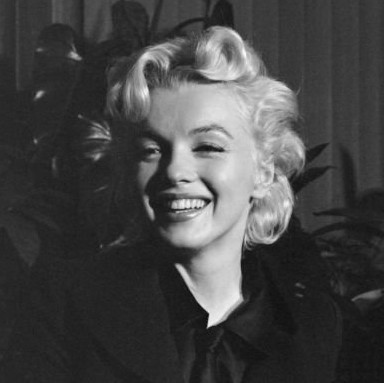
Marilyn Monroe at 100
‘Please don’t make me a joke,’ she pleaded in her last recorded interview, although, by then, the portents were dark.
In ‘An Arundel Tomb’ Philip Larkin reflected on the shallowness that settles like a mist over the deepest graves of the modern age, and how real engagement erodes more swiftly than the stone that now stands in for the spirit. That same sense of quiet regret has more recently been evoked by cultural commentators who, like idle chatterers descending upon a cemetery for a casual sandwich break, improvise elegies to the memory of Marilyn Monroe on her centenary.
She knew what was coming. She knew what would be commemorated. It had never been, and was never going to be, about her; it was always going to be about a plethora of social and cultural prejudices.
‘Please don’t make me a joke,’ she pleaded in her last recorded interview, although, by then, the portents were dark. Where once she had still felt a modicum of autonomy, turning ‘Marilyn’ on or off with a shift of her head scarf and a slight change in her gait, now she sensed her helplessness to fame.
Few performers of such prominence had grown so unnerved by Rousseau’s grimly romantic view of their chosen vocation, with its dubious art of ‘becoming passionate in cold blood’ and its sad fate of ‘forgetting [one’s] own place by dint of taking another’s’. Few, too, fought so hard against such a perception (‘I want to be an artist, an actress with integrity’), and few were pilloried so much, and so publicly, for doing so.
It was as if her crime was her resistance to appropriation. It was as if her delusion was her refusal to surrender her claim to authenticity.
As in life, so now in death, Monroe is treated less as a person and more as a palimpsest, a convenient wipe-clean tabula rasa upon which each new breed and creed can scribble their initials and sketch their own ideals. In the months prior to and post her June 1st anniversary, she has been used as a peg to hang articles or events about celebrity, aesthetics, travel, fashion, cosmetics, jewellery, infertility, mental health, gardening, gay pride and politics. There are books, box sets, posters and postcards, Floris, Ipsy, Lisa Eldridge, Bésame and Color Street limited-edition ‘MM’ collections, Guess ‘Marilyn’ three-zip jeans, Aurate canary pendant necklaces, Piper-Heidsieck limited edition champagne, caviar, cat-eye sunglasses, cuddly toys, several ‘immersive experiences’ and even a (mercifully aborted) auction of the X-rays of her pelvis.
As a seemingly inexhaustible source of pabulum for metropolitan prattle, she is encaged in the equivalent of an ideological makeover app, where she can be made to resemble whomever and whatever is desired or despised for the next debating point of the day. Dismembered rather than remembered, it is about as far away from an honest and honourable appreciation of (what Henry James would call) ‘the bare facts of intimation’.
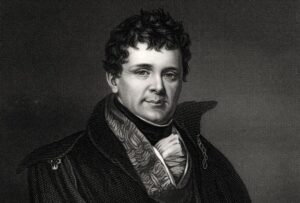
It is tempting, as this particular circus prepares to leave town, to consider that it has ever been thus. Consider, as a point of comparison, the case of Thomas Paine. The British-born beacon of the age of reason and revolution, Paine grew used to being traduced by the Tory propagandists of the time such as William Cobbett under the guise of Peter Porcupine, who branded his enemy ‘a scoundrel’, ‘a seditionist’, ‘a hypocritical monster’, an ‘atrocious infamous miscreant’, ‘a hoary blasphemer’ and an ‘infidel’. ‘Like Judas,’ sneered Porcupine, ‘he will be remembered by posterity; men will learn to express all that is base, malignant, treacherous, unnatural and blasphemous by the single monosyllable, PAINE.’
In September 1819, ten years after Paine’s death, Cobbett had transitioned into a radical and decided that posterity had not remembered him well enough. He took a wagon under the cover of night to a small farm in New Rochelle, New York, where the remains of the man his old allies had shunned were in a pauper’s grave. It was here, armed with a shovel and spade, that Cobbett began to dig up the coffin of Paine.
Bringing the bones back to the land of their birth, Cobbett’s intention was that they would be exhibited in London and then re-buried – this time under a colossal statue to inspire a new generation into rediscovering ‘the common sense of the great man’ and, it was hoped, spark a popular revolution. ‘Never will England be what it ought to be,’ he vowed, ‘until the marble of Pitt’s monument is converted into a monument to the memory of Paine.’
Cobbett’s plans came to naught, however, and he was roundly reviled as a grave robber (Byron wrote: ‘In digging up your bones, Tom Paine/Will Cobbett has done well:/You visit him on Earth again,/He’ll visit you in Hell’), and he fell into penury. In 1835 he would die with Paine’s remains languishing in a crate in the cellar of his farm near Farnham in Surrey.
What became of the bones is the stuff of legend. An attempt by Cobbett’s impecunious eldest son, also named William, to sell them off with the rest of his father’s effects was thwarted when the local auctioneer, upon discovering what was kept inside the crate, refused to handle them. The crate and its contents went, by default, to a neighbouring farm labourer acting as trustee of the estate. He kept them, somewhat reluctantly, until 1844 when he passed them on to Cobbett’s old secretary, Ben Tilley, then working as a tailor in London’s Bedford Square. He stored them in his shop, in a container that served as a footstool for his customers.
By 1853 Tilley had also fallen on hard times and the contents of the crate (sans part of the brain, which it is believed he retained as a souvenir) were put up for auction in Rathbone Place. Apart from the skull and one hand, which were sold separately, the remains were bought by a Quaker bookseller called James Watson. A radical activist who played a major part in the Chartist movement, Watson published a biography of Paine (as well as several of the man’s writings) and planned to honour his memory by burying his remains in the grand Kensal Green cemetery. For some unknown reason, however, he never did. What he did with the bones remains a mystery. When he died, in 1874, the crate went missing and the speculation began.
Stories started circulating that the skeleton had been broken up and parts sold to a local rag-and-bone man, or put on display in a country tavern, or crushed and made into buttons, or dumped into the muddy waters of the Thames. Robert Ainslee, a Unitarian clergyman, would maintain that he had the skull and right hand but refused to answer further inquiries about the matter, let alone provide any proof.
In the years following, there were reports of various sightings in the letters’ pages of the British and foreign press. In 1905 The New York Times reported that a man named Moncure D Conway, the then-president of the Thomas Paine National Historical Association, claimed to have located a fragment of Paine’s brain in London, which he planned to take back to the United States and reinter in its original burial ground. In 1914 the same paper announced that a small wooden box had arrived in New York, via parcel post, containing two locks of Paine’s reddish-brown hair, along with a wax cast of his face. In Britain, in the 1930s, a Brighton woman insisted she had found Paine’s jawbone. In 1987 a Sydney businessman claimed he had purchased Paine’s skull while on vacation in London. The facts mingled with the fictions, and the search for the missing pieces of Paine continued.
It was not only Paine’s body that had been so cruelly dismembered, however. It was also his body of ideas. When Cobbett’s son inherited the bones, he did not hesitate to inscribe his name ‘in several places on the skull and on most of the larger bones of the limbs’ to confirm his claim on proprietorship. The same kind of conceit, in the two centuries since, has been attempted across the ideological spectrum.
To the left, Paine remains a great champion of rational reform, civic virtue and equality (Barack Obama cited him during his 2008 presidential campaign to support a notion of communal solidarity). To the right, he is a defender of individual rights, personal opportunity and liberty (Ronald Reagan cited him during his 1980 campaign to lend a sense of historical legitimacy to his plans to reverse the growth of government). To the centre, he is something of a mixture of the two – a thinker committed to the freedom to flourish and the freedom to serve, a harbinger not only of the free market but also the welfare state.
To people of faith, the interpretations have varied from the positive (the application of some aspects of his writings to religious pluralism) to the negative (Theodore Roosevelt’s dismissal of him as a ‘filthy little atheist’). To the new breed of peculiarly dogmatic atheists he has become, despite his strong Deist faith, an icon of unbelief.
Culturally, the selective use – and misuse – of Paine’s words, concerns and ideas remains widespread. Each new fiction folds a new layer over the fragments of facts. It all means what we want, or what it suits us, to mean.
Paine has become, like Auden said of Freud, ‘no more a person now but a whole climate of opinion under whom we conduct our different lives’. Even more so than Freud, his ideas have been systematically misunderstood, misappropriated and misrepresented. In today’s cut-and-paste culture they come to resemble nothing more than a Borgesian-style self-portrait, a projection of someone else’s personal paradigm.
Such a ritualistic dance of projection, appropriation and attribution of errors has become a common phenomenon in a world where impatience, insensitivity and confirmation bias are baked-in ingredients of our search engine-assisted cultural curations. It has been a particularly egregious exercise in the case of Monroe, whose life has come to serve as little more than a stimulus for more spins of the oped roulette wheel, a cynical exercise in evanescent ideation, while its integrity has long been allowed to decline into desuetude.
How poignant her question now seems: ‘If I can’t be myself, who can I be?’
The answer, alas, is: ‘That’s up to us, not you.’
It was bad enough when she was alive. Think of Billy Wilder’s 1955 movie The Seven Year Itch, where she didn’t even play a character as such but appeared as ‘The Girl’. Consider the photographer Richard Avedon’s striking 1958 quintych, in which he had her dissolve herself into portrayals of Lillian Russell, Theda Bara, Clara Bow, Jean Harlow and Marlene Dietrich, leaving behind only a faux platonic essence of female sexual glamour.
The corporeal humiliation she suffered soon after her death, at the age of just thirty-six on August 4th, 1962, was less dramatic and sustained than that inflicted on Paine, although the indignity was disgraceful. The LA police released an image of her naked body, lying face down in bed at her Brentwood home, with a blank-faced officer standing nearby to point at the arrangement of pills on her night table. Film crews swarmed around the gurney that carried her out of the house. A paparazzo bribed a morgue attendant with a bottle of bourbon to capture shots of her freshly autopsied corpse, from the head to the toe-tagged feet. At the funeral home an embalmer cut off a lock of her hair that he later put up for auction.
She was buried on August 8th, 1962 in the Westwood Village Memorial Cemetery. Her casket resides in Crypt 24 of the Corridor of Memories, safe and secure behind a block of pink marble and a rectangular bronze plaque.
The spiritual and cultural interventions, however, would never stop. Rival claims for her essential iconicity: as heroine, martyr or monster; a symbol of sex or stardom; feminist resistance or patriarchal submission; stoical contentment with the sufficient or Enlightenment craving for the superabundant; Barthesian jouissance or Irigarayan invagination; the peak of postwar hope or the end of its innocence; and a plaything for every generation from Boomers to Zoomers, clutching at a particular human life like fairground claws swooping to snatch a prize.
Men, unsurprisingly, have proven callous chroniclers. Arthur Miller, Monroe’s former husband, reduced her memory to little more than a cypher of his own suffering in his play After the Fall (1964). ‘A suicide kills two people,’ the Marilyn character is told, ‘that’s what it’s for!’
Norman Mailer’s 1973 ‘novel biography’ Marilyn, on the other hand, appeared almost proud of the way it minced the tendons of truth with the gristle of gossip. Intended for quick and unthinking consumption, he promised to remove her multiple masks (including those of ‘fatherless child’, a ‘cyclone of beauty’ and a ‘Napoleonic’ force of nature), only to lift the last one and reveal his own face rather than hers.
Then there was the way Elton John and Bernie Taupin hurriedly ‘upcycled’ their 1973 homage to Monroe, ‘Candle in the Wind’, like some cheap old frock as a tribute to Diana Spencer in 1997. A shabbier exercise in expiry date sincerity would be hard to imagine.
Some women, in their own ways, have been just as culpable. The novel Blonde by Joyce Carol Oates was one of the most shameless of all, glibly announcing, like a politician waving away protestations about failing to master a brief, that ‘synecdoche is the principle of appropriation’, before reducing the woman and her life to a sort of aged and battered pinball machine stuck in the corner of a seedy seaside arcade. Then it launched into a sprawling, 738-word popcorn chomp of a Faustian romp, with Monroe as the unsated searcher and Fame as the drooling Devil, honking hoary homilies from chapter to chapter.
One might refer, by way of extenuation for such encrustations of opinion, to the notion of porosity. Coined in the 1920s by the critic Walter Benjamin, it was inspired by a visit to Naples and his observation of the absorbent and friable volcanic building material – the tuff – of the city. It sought to capture the ambiguous process whereby fact admits and adapts to fantasy, as time and taste wear away ‘the stamp of the definitive’ and serve as the ‘theatre of new, unforeseen constellations’.
The mundane carelessness of many of Monroe’s commentators, however, cuts deep into the existential core of biography as a humane and ethical commitment, its bid to engage with, rather than just impose on, the complex totality of an individual. As classical political thought teaches us, wisdom is rooted and reinforced in our routine interactions, not our rarefied reflections, and what we do, or try to do, in biographies is an index of the state of our mutual respect. Good biographies are windows; the bad ones, mirrors. Arguably no subject has been burdened with more reflective surfaces than Monroe.
The way that lives are now commemorated probably befits an age in which the collective pulse has been replaced by multiple ones, and decentralised tastes devour disconnected details with writers like vultures feasting on carrion, but it is nothing that merits approbation, let alone applause. Our expression is an echo of the authenticity of our engagement and its constructive social resonance, the cue to conscience described by Adam Smith as an intimation of ‘the eyes of other people’ has been so deconditioned by phubbing and earbud addictions, that the norm is now: ‘Enough about them – let’s hear more about us.’
This hermeneutic narcissism is no reason for biography to be declared redundant. It is a reason, and provocation, to try to do it better. Yes, we should feel free to reflect on what Monroe means to us, but only once we’ve done our best to reflect on what she meant to herself. The former, without the latter, is not biography, merely one more lazy paean to solipsism.
Why step into the cemetery if one is certain that nothing is there? The compulsion to put flesh back on the bones, to move beneath the marmoreal gleam, is to seek to, as that fine and thoughtful writer of lives Richard Holmes described it, ‘produce the living effect, while remaining true to the dead fact’.
If what will survive of us is not really love but only a cold and callous kind of expediency, then surely there is still sufficient decency within us to summon up a suitable degree of respect for those gone, and if not honour another life lost then, at a minimum, treat the memory with due care and discretion.
As for Monroe, a century on from her birth, may she be left to rest no longer in pieces but at least, and at last, in peace.
Donate ← Back to the current issue