Rereading 3: Contra Phony
It is as if Holden Caufield is talking to you directly, as his privileged confidant, enlisted in his war against phoniness.
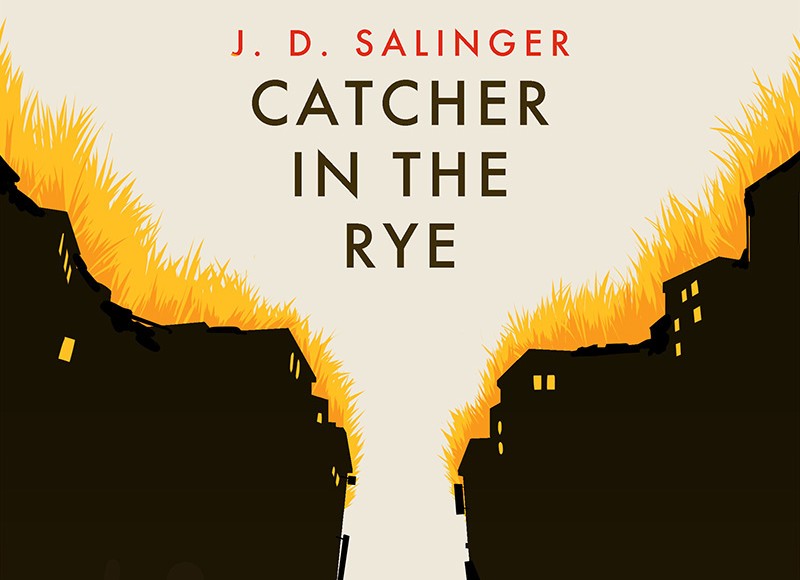
Martin Tyrrell returns to The Catcher in the Rye seventy five years after its publication.
In the late 1960s Adam Faith, at the peak of his career as a pop singer, was interviewed on a highbrow BBC TV programme called Face to Face. John Freeman, a former army officer and Labour MP, was its mildly inquisitorial host. Faith was an unusual choice for a show that had featured Carl Jung, Bertrand Russell and Edith Sitwell as its guests and some at the time thought he had been brought on to be mocked. But if that was the intention, it failed. Faith comes across serious and aspirant. There is a point in the interview where Freeman asks him, not quite if he can read, but if he reads much. ‘A fair amount,’ Faith says. ‘As much as I can.’ And when he is quizzed on this fair amount, asks: ‘Have you read any of Salinger’s [books]?’ As if he half expects that Freeman, thirty-five years his senior, might not have heard of Jerome David Salinger, the same way he might not have heard of ‘Shakin’ All Over’ or Radio Luxembourg. But Freeman is in the know. ‘The Catcher in the Rye!’ he says. ‘That is my favourite book,’ says Faith.
It would have been a lot of people’s favourite at that time, most of them young, or young at heart. Ian Hamilton, the future poet, critic and author, was one of them. Some thirty years on, he would recall how much this slim, stylish novel had meant to his teenage self. It was, he said, ‘the book all brooding adolescents had to buy’. Hamilton also added, because he had soured on Salinger over the matter of a biography, ‘it gave voice to the malaise of the advantaged’. But there was nothing advantaged about Faith, who had risen from the kind of poverty that for a time looked like it might soon be eradicated. Out of school at fourteen and unqualified, only to find himself, five years later, in the charts and on the TV, talking to that nice John Freeman. And holding his own. Faith wears a suit and tie and has standardised his accent. What we think of as the 1960s has yet to find its swing. In the Freeman-Faith encounter, there is no sign of it. It is coming down the tracks, sure as the Six-Five Special, but they cannot hear it. Not just yet. Faith likes Sibelius and reads Huxley, and he is saving for his old age. The Catcher in the Rye is the only hint of dissent.
Three quarters of a century have passed since the book was published. A best-seller from the outset, global sales were estimated at 65 million by the mid-1950s. The book made Salinger even if, in a sense, it also broke him. Thanks to it, he could live and write as he pleased and his later books, which might have struggled to find a publisher, let alone a market, became modest best-sellers. But he did not take to fame and went to considerable lengths to avoid its consequences, retreating to Cornish, New Hampshire, where he would put in long hours of mostly unpublished writing interspersed with discreditable attempts at cultivating younger women as girlfriends, marriage partners, or lonely, long-suffering assistants.
The plot is well known. In the run-up to Christmas 1949, Holden Caulfield, sixteen and troubled, is about to be expelled from Pencey Prep, an expensive private school. It is the third such school that has let him go. After a punch-up with his roommate, Ward Stradlater, he heads back to New York, where he spends a couple of days either on his own or with his long-suffering, maybe-girlfriend Sally Hayes before facing his parents. He meets a few people, reconnects with a few others, and looks back on his short life. He fantasises about dropping out and living away from it all somewhere rural, or of setting himself up as a protector of the young, the titular Catcher in the Rye. A year on from ‘this madman stuff’ (as he describes it), he is in therapy, his issues unresolved, his fate uncertain.
Irreverent rather than subversive, The Catcher in the Rye did not, as some have suggested, cause the ‘Long Sixties’, the youth rebellion part of it. More likely, I think, it simply caught the wave. If Holden has a message, it is ultimately more religious than revolutionary, a kind of fellow feeling towards even the book’s more despicable characters. For all his issues with the ‘phony’ world of adults and wannabes, he is not out to undermine conventionality but to remove himself from it, whether literally or spiritually.
JD Salinger had begun writing seriously in 1938 when, aged nineteen, he enrolled in Whit Burnett’s well-regarded creative writing class at Columbia. Over the next couple of years, he enjoyed a run of commercially successful stories. As 1941 drew to a close, he must have felt like he had arrived. Then came the war. He joined the army and served in the liberation of Europe, which traumatised him. Post-war, Salinger cooled on writing until Advaita Vedanta Hinduism and the New Yorker steered him towards heavier and more distinctive material. The unsettling A Perfect Day for Bananafish (1948) marks the start of this departure and Hapworth 16, 1924 (1965) – the last piece of writing he would publish in his lifetime – the end of it.
The Catcher in the Rye sits between the author’s two phases – pre-war commercial and post-war heavy. Much of the later Salinger is signposted in the novel. Holden yearns for the reclusiveness that the author would himself achieve. He frets, as Salinger may have done, that the artist who has achieved an audience (or a readership) can ultimately only disappoint by becoming self-conscious, arch and self-parodic, like the Lunts in I Know my Love. Better to play the piano ‘in the goddam closet’, Holden reckons, than in Ernie’s nightclub in Greenwich Village. Like several Salinger characters, notably Seymour Glass, he intuits that the everyday world is false, abusive and deeply flawed and that people, the very young especially, need to be steered away from it, ideally by one of their few uncorrupted elders (Holden himself, say). But young people can also be insightful, wise beyond their years (like Holden’s younger siblings Allie and Phoebe) and redemptive of the troubled soul (Phoebe, again). There is religion, too, albeit unorthodox and idiosyncratic. Holden rates Jesus, but not his disciples. He is drawn to the monastic life and impressed by the nuns he meets on his journey, and their selflessness and charity highlight the shortcomings of people from his own privileged background. He speculates that Sally Hayes’s mother, for instance, would only collect for charity ‘if everyone kissed her ass for her when they made a contribution.’
The book draws on Salinger’s earlier run of commercial stories, ones he would later block from republication. Two of these – ‘Slight Rebellion off Madison’ and ‘I’m Crazy’ – feature Holden in scenes that appear in the novel while a third, unpublished story, was rewritten as Holden’s fight with Stradlater. Holden and his issues had been on Salinger’s mind from the start of his writing life but, over time, he would rework his material both stylistically and thematically. ‘Slight Rebellion’, for instance, is the scene in the lobby of the Biltmore Theatre in which Holden and Sally meet George who goes to Andover. The story, in its original, New Yorker version, is told in the third person in a knowing, affected way. George and Sally, its narrator tells us, greeted each other ‘with the gusto of two who might frequently have taken baths together as small children’. In the novel it is Holden who narrates: ‘You should have seen the way they said hello. You’d have thought they’d taken baths together in the same bathtub or something when they were little kids. Old buddyroos. It was nauseating.’ The first-person voice is distinctive, beguiling and lifts this scene, and every scene in the book, out of the ordinary. It is as if Holden is talking to you directly, as his privileged confidant, enlisted in his war against phoniness. It is the kind of voice, and character, that you know you will miss when you reach the end. Holden’s spiky narration of his keenly felt woes was the main basis for the novel’s popularity. He makes his despair funny, like a great, self-deprecating stand-up, but it also means you can easily overlook his authentic ennui, not to mention his flaws.
‘You never saw so many phonies in all your life,’ he says at the interval. Phonies as distinct from ‘morons’, the other category Holden despises. Morons are merely stupid, insensitive and unreflective, but phonies are clever and calculating. Phoniness is the conscious act of performing to impress the dubious adult world. George must, literally, give himself room to expound on the Lunts, by straying into the personal space of others, treading on a woman’s foot and breaking ‘every toe in her body’, as Holden puts it.
Holden’s denunciations of phonies and phoniness, though wonderful fun, are deeply unfair and hypocritical. Elsewhere he admits to his own tendency to please, even if this means telling outright lies, which we witness in the scene on the train with Mrs Morrow. It would be a mistake, however, to conclude that the point of the novel is to show that Holden, the great caller out of phonies, is essentially a phony himself. There is a lot more to him than that, and to the book, much of it revealed by Holden in passing and despite himself.
At the start he says he will spare us his autobiography, ‘all that David Copperfield kind of crap’. It is remarkable what he ends up telling us. Sixteen and privileged, he has nonetheless had his traumas, of which the sudden death of his younger brother, Allie, is the most significant. Nearly three years on and he is still grieving, having elevated his brother to a kind of saintly figure, preserving his baseball mitt as a relic and even invoking his beyond-the-grave assistance during a panic attack on Fifth Avenue. One act of meanness – when Holden forbade his brother from joining him and a friend on a hunting trip – continues to eat at him. In his head he replays it with a different ending, in which he relents and lets Allie come along. The memory of this small sin may account for Holden’s frequent and marked sensitivity towards others. Having hurt one person, he has become, at times, wary of doing the same. Ackley, for example, is a fellow student at Pencey who is physically unappealing, brash and without filter, and Holden is repelled by him. And yet he cannot leave him in his room alone on a Saturday night while Holden and a classmate go to a movie: ‘You had to feel a little sorry for the crazy son of a bitch.’ Similarly, in New York, when Holden arranges for a prostitute to come to his hotel room, he does not feel able to sleep with her, in part through lack of confidence but also because he realises that she is, like him, only sixteen. Later, in the lobby of the Biltmore Theatre, he wonders what will happen to all the girls he sees there, where time and life will take them. He imagines his mother, lovingly buying him skates – the wrong type, as it happens – and for a school from which he has now been expelled. He is moved to tears when Phoebe gives him her Christmas money and can barely bring himself to spend it, walking rather than taking a taxi and sleeping on a bench in Central Station. If Holden is memorable for his scathing and indiscriminate denunciations, it is these moments of compassion that distinguish him.
Salinger would, at different times, claim or deny that The Catcher in the Rye was autobiographical. Both he and Holden come from similarly wealthy backgrounds but it is interesting the ways Salinger has made these backgrounds differ. Where Salinger’s family was merely rich, the Caulfields are also cultured and well-educated. Where Salinger’s father was an entrepreneur in the food industry, specialising in the luxury end of it, Holden’s is a corporate lawyer who backs fringe theatre on the side. The Caulfield home is the type of environment that confers multiple advantages, not just old (or oldish) money, but parents who, having been educated themselves, educate their children by giving them an easy familiarity with the world of high culture. The Caulfield children have thrived, creatively and intellectually. DB, the eldest, is an acclaimed writer; Allie was a poet in the making; Phoebe, aged ten, can already take in Shakespeare; even Holden, whatever else he fails at school, is strong in English and can tell a great story. Perhaps this was how Salinger would have liked his own family to be – nurturing and supportive of his literary ambitions, not dismissive, which appears to have been the case at the start.
There is another difference between the Caulfields and the Salingers. Salinger was Jewish on his father’s side (his grandfather had been a rabbi) and on his mother’s side, Catholic of mixed Irish, Scottish and German descent. In the identity politics of the time, being Jewish (or Catholic) was a big deal. Materially, the Salingers were close to the top, but their ethnicity put them firmly outside the WASP (white Anglo-Saxon Protestant) elite. Salinger appears to have reacted to this by largely downplaying his Jewish heritage, perhaps with some parental encouragement (his biographers differ on this). It is interesting that antisemitism rarely features in the writings he considered canonical, the post-war output. The story ‘Down at the Dinghy’ is a notable exception – a child of Jewish-Irish heritage overhears an antisemitic slur directed at his father – and WASP antisemitism may be implied in ‘The Laughing Man’ from the same collection, Nine Stories.
The Catcher in the Rye is subtle on identity issues. Holden is neither as WASP as he might at first seem, or as he appears to consider himself. He places himself among the wealthy majority at Pencey, boys whose parents, like his own, can stretch to fancy suitcases and so forth, and differentiates himself from at least two other groups – poorer students like a boy he once roomed with, and Catholic students. It is what Holden says about Catholicism that is particularly interesting. He is certainly not antagonistic. As noted, he admires the nuns he meets and is also, if briefly, attracted to the idea of life in a monastery. At the same time, Catholics are for him an outgroup from which he distances himself and of which he is wary, to some extent. When they first meet you, he says, they quiz you unsubtly to see if you are a Catholic too. He does not blame them for this but neither does he reflect on it – why people from a minority group might be hopeful of finding others, particularly in the caste-conscious environment of an American private school.
This is not the extent of Holden’s relationship with Catholicism. People, he says, sometimes assume that he is a Catholic on account of his surname, Caulfield, which he says is Irish. As it happens, Holden’s father used to be a Catholic but ‘quit’, possibly to marry Holden’s mother. Holden does not explain what he means when he says his father ‘quit’ being a Catholic. Elsewhere he says that his parents ‘are different religions’ and it may be that his father has not so much quit the Catholic church as blurred or played down his association with it. Holden also states that he and his siblings have been raised as atheists. If that is so, Holden’s atheism has not lasted. From his own narrative, he seems vaguely Christian in his behaviour (he attends religious services at Pencey, though this may be an attempt at fitting in) and in his beliefs (an afterlife and the possibility of divine punishment and redemption).
Had his father not blurred his religious background, it is possible that Holden would have been seen, at Pencey and in general, as a Catholic and an Irish American. He would have been seen, by some at least, as ethnically the same to his father just as Salinger sometimes was. Holden evades this primarily by identifying himself negatively, on what he is not – neither Catholic nor Irish. The rich upper middle class is the main positive identification he makes. He is rich like Stradlater. Indeed, the very reason he rooms with Stradlater is, he says, because they are from the same social class and will therefore never fall out over small matters such as the ‘bourgeois’ accessories their respective parents can afford to buy them.
If Holden’s family name has the potential to out him as a minority twice over – Irish-American, Catholic – his forename, which sounds like a surname used as a first, may have been selected by his parents to counterbalance this. Likewise, Ward Stradlater. Salinger appears to have invented the name Stradlater, which sounds more Teutonic than Anglo-Saxon. Holden and his nemesis could have another thing in common besides family money – both are ‘passing’ in the sense of trying to present themselves as more WASP than they are.
Holden’s problematic identity can be read between the lines of his rapid-fire narration. At sixteen, for instance, he already knows his drinks to the extent that he has favourites (frozen daiquiri, scotch and soda) and has a good idea of the places in New York where he might get served. He also imagines himself both socially confident and sexually desirable, in with a chance with the three women from Seattle that he meets in the Lavender Room and with the nightclub singer, Valencia. Neither the Lavender Room, however, nor the restaurant at Radio City will pour him anything stronger than a Coke, while the barman at Ernie’s only serves him because it is too dark to tell his age. The women are unimpressed. The ladies from Seattle seem to humour him but leave him to pick up their sizeable drinks tab. It is when he has a run-in with the elevator operator (and part-time pimp) Maurice that the real Holden, as distinct from the self-imagined one, becomes evident. Threatened by this minor but plausible thug, Holden becomes frightened and tearful. It is the second time he has been beaten up in about 36 hours, the first being care of Stradlater. There was also a psychologically bruising encounter with the headmaster and something similar from the history teacher. Faced with older males who are physically or institutionally more powerful, Holden invariably comes off worst. Perhaps he should count himself lucky, though. James Castle, a fellow pupil at one of Holden’s previous schools, was not so fortunate, having been bullied to the point of suicide. The boys responsible, an indignant Holden tells us, were merely expelled but there was no criminal prosecution.
Where James Castle has been bullied to death, Holden has been bullied to docility. His antagonist is Stradlater, who is slightly older, bigger and more powerful and whose talent for football (an ‘athletic bastard’ in Holden’s terminology) has earned him privileges at Pencey – the football coach, for example, allows him to borrow his car to go on dates. Stradlater habitually greets Holden with a slap on each cheek. With a date ahead of him, he has Holden write him an essay for the next day’s class, borrows Holden’s jacket even though it is too small and he may ruin it, and helps himself to Holden’s hair oil. It is Holden’s turning on Stradlater – a foolhardy assault that ends with Holden being knocked unconscious – that leads to his early departure from the school and the start of his lost weekend in New York.
The principal reason for Holden’s anger and for his decision to stand up to his roommate is not that he has had enough of Stradlater’s coercive control. It is that Stradlater’s date is with a girl, Jane Gallagher, that Holden knows and to whom he is attracted. Holden’s relationship with Jane has been platonic. Despite one vain effort on his part (when he tried to seduce her while consoling her), golf, checkers and a Fourth of July dance (which Jane attended with someone else) have been the high points of their time together. Jane’s evening with Stradlater, Holden suspects, has been different (Stradlater says as much when he jeers that they didn’t play checkers). He frets about it for the rest of the novel. Not only is Stradlater athletic and domineering, he is libidinous and promiscuous (‘a sexy bastard’ in the Holden argot). He also fears that she may have responded enthusiastically to his virile, prestigious and insistent roommate. But if she by chance resisted, Stradlater may have forced himself on her, have sexually assaulted or even raped her. Holden recalls being on a double date with his roommate during which he heard Stradlater putting on a show of sincerity (‘I damn near puked listening to him’) while the girl he was with kept saying ‘no’ until, says Holden, there was ‘this terrific silence in the back of the car’ adding that ‘it was really embarrassing’.
This type of thing, he tells us, is run of the mill. Boys on dates often force themselves on the girls they are with. Girls ask them to stop but ‘most guys’ ignore them. He is not ‘most guys’ and always stops, even if he usually does not want to: ‘You never know whether they really want you to stop, or whether they’re just scared as hell, or whether they’re telling you to stop so that if you do go through with it, the blame’ll be on you, not them.’ Here Catcher in the Rye points to a darker side of American dating culture that has often been romanticised or seen as whimsical. Elsewhere, Holden admits to being fascinated by unconventional sexual tastes – ‘crumby stuff’, he labels it. He is ‘probably the biggest sex maniac you ever saw’ and once had a girlfriend that was ‘even crumbier than I was’. What is said about the mainstream, however, is more noteworthy. Boys like Stradlater, who are to all appearances respectable, often molest (or worse) the girls they date and bully other boys (sometimes to the point of suicide).
Holden is complicit in this culture rather than subversive of it. He witnessed the James Castle incident but never mentioned it to anyone who might have been able to do something about it. Also, by his own admission, he ‘horses around’ with girls he does not especially like and concedes that he cannot give this up. He accepts the rules of the dating scene just as he tolerates bullying, the class system, school religious services and farcical private school fraternities. The small empathy he shows towards some of the girls in the story redeems him, but only a little. It is bizarre that Frederick Gwynn and Joseph Blotner, in their 1958 The Fiction of JD Salinger, the first serious study of the author’s work, see Holden’s treatment of the girls in his life as strongly positive, a sizeable point in his favour and clear evidence of his better nature. In fact, if his views on girls and his treatment of them can be considered as positives, then it is only because the views and behaviour of Stradlater and similar are so much worse.
Holden’s attitude to Sally Hayes is illustrative. He downplays her role in his life. ‘I wasn’t crazy about her,’ he says, and describes her as ‘only a girl I used to go round with quite frequently’. And yet he has kept her photograph in his room at Pencey, which he shares with Stradlater. Moreover, it is Sally he invites to join him on his lost weekend. When he sees her coming up the steps of the Biltmore Theatre, he is so smitten he wants to marry her. Part of the scorn he feels for George in the interval is jealousy towards a boy he suspects might, for all his ridiculous affectation, be a better match for Sally. Significantly, it is Sally he tries to persuade to come with him on his wilderness adventure. Only when she puts forward reasonable objections to this plan does he turn on her with insults.
Sally means more to him than he cares to say, it seems. Theirs appears more like a proper relationship than the casual, one-night dates he mentions, or the unrequited affection he has felt for Jane. For all of Holden’s ideas of himself as a smooth ladies’ man, Sally is the only girl we see who has any romantic interest in him. If she is cooling on him and beginning to look elsewhere, it is perhaps understandable. ‘Queen of the phonies,’ he calls her. If he fell for her, he says, it was because he once thought her intelligent ‘in my stupidity’. One of his faults, Holden says, is that he believes whatever girl he is making out with is intelligent and he only realises his mistake afterwards. Nonetheless, even as his lost weekend is coming to a close, he is not quite finished with Sally, calling her late at night to make a drunken and incoherent apology.
What will become of Holden? He comes up with two impractical options. One is that he will go and live as far from the world as he can manage. The other is that he will become a ‘catcher in the rye’, standing at the edge of a metaphorical field to save any child who strays out of it towards the ‘crazy cliff’. Whatever else might be said of this latter, it is a more benign version of his earlier thoughts of exacting brutal revenge on any who might sour the childhood experience – the graffitist, say, who scrawls obscenities where Phoebe and her peers might see them. (At least three killers, including David Mark Chapman, saw Catcher as a kind of holy writ that sanctified their actions, John Lennon and their other victims having, in their eyes, lapsed into phoniness.) By the end of the book Holden has at least accepted the impracticality of his aims, in part through the wise words and example of Phoebe. He may even have made a kind of peace with the phony world. He is in therapy, which at that time would almost certainly have held the assumption that the way things are is more or less fine and that it is the client who needs fixing. (That is how it comes across in Sylvia Plath’s The Bell Jar, as great a tale of youthful alienation as Salinger’s.) Holden has been damaged, in part, by the normalised brutality he has met at school. Where Sally is bored by school, he hates it. Whether or not therapy helps him, the wider world will continue as it was and what has harmed Holden will harm others.
The Catcher in the Rye did not make a social revolution. To the extent that it is social commentary, it is muted. Its greatest impact has been literary. The characterful, generally youthful, typically jaded first person narrator has become a staple – from The Bell Jar, A Confederacy of Dunces and Girl, Interrupted, and up to the Brat Pack writers of the 1980s. It is also the urtext for these later fictions. If Salinger’s subsequent fictions have had less of an impact, it is in part because they took their leave, not just of humour but form and, by the end – Hapworth 16, 1924 – even believability. As for the writing he produced over decades but did not publish, it is possibly significant that none of it has seen the light of day, more than twenty years since his death. If the artist with an audience risks archness, then the artist in a ‘goddam closet’, or a New Hampshire writing shed, risks self-indulgence. The Catcher in the Rye has neither of these failings. It is iconic and enduring, peak Salinger, the kind of peak from which he could only slip.
Donate ← Back to the current issue