In January 1978 half a dozen journalists at The Observer newspaper in London were putting the finishing touches to a story that had been months in the making. This team was going to reveal the existence of an extraordinarily secretive British government propaganda organisation, a unit which had, it is no exaggeration to say, covertly seduced hearts and minds across the globe: quietly persuading much of the world to see life as Whitehall wished them to see it.
Embedded within the UK Foreign Office, the Information Research Department (IRD) had been writing articles that were being planted in newspapers across Africa and south America, the journalists had discovered, and was covertly running a number of publishing houses, commissioning and distributing books and magazines that appeared, to all intents and purposes, to be entirely independent of the government.
Their story was, in British journalistic parlance, a bit of a marmalade-dropper.
Or it would have been, had The Observer not been scooped by The Guardian two days before it had been due to publish. Under the headline ‘Death of the department that never was’, The Guardian informed readers that the IRD, as well as supplying copy to newspapers in the developing world, had been slipping stories to the BBC World Service. Lists of approved trade unionists and journalists had been drawn up for the receipt of its output: three journalists connected with the Financial Times, 10 at the London Times and Sunday Times, six at the Economist, one each at the Daily Mail and the Express, and two at The Observer – ‘some of the best-known writers on foreign affairs’, the report acknowledged. The Observer and Guardian were under separate ownership at this time. However, The Guardian’s well-sourced report went so far as to identify four of its own journalists whose names appeared on the IRD’s approved list.
The newspaper also reported that the then Labour government had become suspicious of the IRD because of its links with a number of right-wing journalists, and that it had been disbanded the previous May after the appointment of a new foreign secretary, David Owen. When he published his memoir in 1991, Owen wrote that IRD’s operations had fallen ‘out of step with our more open democracy’, and so the ‘IRD was closed … to achieve greater clarity and end the grey area, which for too long escaped proper scrutiny, falling neither in the open area of diplomacy nor in the closed area of spying’.
In time a book was published about Britain’s Secret Propaganda War 1948-1977, and in recent years a profusion of Foreign Office files about the IRD has been deposited at the UK’s National Archives at Kew, southwest of London. Those papers have spawned endless news reports and in academia the IRD has supported something of a historians’ cottage industry.
As a consequence of the declassification of those papers, today it can be seen that the IRD’s ambitions were almost boundless. It operated a global network of radio stations and news agencies; planted stories in the media in the UK and Europe as well as the developing world; produced Arabic-language romantic novels, within which messages were embedded to counter both communism and Arab nationalism; and distributed sermons around the Islamic world.
At the same time from the US, the Central Intelligence Agency (CIA) was running its own surreptitious propaganda operations, most famously providing covert funding for the literary magazine Encounter, and apparently promoting American Abstract Expressionist painters such as Jackson Pollock, whose work was thought to demonstrate the artistic superiority of a land that prized individual liberty.
In London the IRD also incited anti-communist sentiment that appears to have fuelled massacres in Indonesia; attempted to interfere in an Italian general election; paid historians to produce anti-communist works; promoted the UK’s bid to join the European Economic Community; secretly helped to fund Reuters news agency; smeared British trade union leaders and, on at least one occasion, attempted to influence a jury during a criminal trial in England.
Following the closure of the IRD in 1977, all that ended. Or did it?
There certainly were changes at the IRD during the mid-1970s, but they had little to do with clarity or transparency, or with the organisation’s links to right-wing journalists. They had a lot to do with money – specifically, the British government’s lack of it.
The heavy cost of waging the second World War, the financial burden of the post-war welfare state, and years of economic decline had led successive governments to go cap-in-hand to the International Monetary Fund several times since the mid-1960s. Chancellor Denis Healey cut public spending twice in 1975 and would do so again the following January.
It was against this background that a body called the Central Policy Review Staff (CPRS) decided to take a close look at Foreign Office spending. The CPRS had been set up in 1971, bringing together civil servants, academics and industrialists to help develop long-term government strategy. In 1975 one of the people attached to it was John Guinness, a diplomat from the banking branch of the well-known family. Guinness had formed the view that British embassies and high commissions tended to be staffed by clever, well-educated people who spent too much time twiddling their thumbs, and persuaded the CPRS to look at the department’s overseas postings.
The Foreign Office was horrified. Senior mandarins attempted to kill off the review with a rearguard action that would be fought along the corridors of Whitehall and within the tea rooms of Westminster. They lost. The review would go ahead. But what to do about its hidden department – the IRD?
In February 1976 Sir Michael Palliser, permanent under-secretary at the Foreign and Commonwealth Office (FCO), decided to have a quiet chat with Sir Kenneth Berrill, the head of the CPRS, during which he would pull back the curtain a little. A few days later Sir Michael followed up with a letter to Sir Kenneth, marked ‘secret and personal’, reminding him that he had ‘explained the difficulty that some of IRD’s work is rather sensitive and secret’. The Foreign Office would appoint its own man to review that part of its domain. ‘We would, of course, make his report available to you and your team – though some parts of it might have to be handled in a rather restricted way.’ Sir Kenneth agreed.
The man chosen to conduct the review was Sir Colin Crowe, a veteran diplomat and former British ambassador to the United Nations, who came out of retirement to do the job. Described by colleagues as patient and pragmatic, Sir Colin had served in several sensitive posts – including in Cairo in the immediate aftermath of the Suez Crisis – and was familiar with the work of the IRD.
The review began in March and was completed by July. Sir Colin’s report, which was marked secret, set out briefly the history of the IRD, which had been established by Clement Attlee’s government in 1948 to counter communist propaganda. Some of the staff at that time were former journalists while others had served with the Political Warfare Executive, the wartime propaganda agency that used radio broadcasts and leaflets to undermine German morale. The IRD grew rapidly during the 1950s and 1960s but was cut back in the 1970s. What Sir Colin did not mention – but his limited number of readers would have known – was that IRD always worked closely with the UK’s foreign intelligence service, MI6.
Sir Colin then moved on to the contemporary work of the IRD, in particular the unit at the heart of its ‘more sensitive and secret activities’ known as the Special Editorial Unit. ‘This unit subsidises certain feature agencies in this country and abroad which are ostensibly commercial and independent who provide a regular feature service to newspapers, etc in various parts of the world through which intelligence material can be surfaced in the international press, most notably in Asia and Africa,’ he wrote. ‘These are deniable.’ It also distributed pamphlets from non-existent organisations. ‘There are also covert publicity outlets in Germany, Switzerland and Austria.’
Next, he considered the future. ‘Do we need an unattributable capacity …? Foreign policy is not something which has only to be enunciated for it to be accepted. It has to be put across, to be explained and expounded, to be sold.’ The government had plenty of means by which to spread its message, but after a while government hand-outs and ministerial statements can become counter-productive, he wrote. ‘People like to feel they are getting something objective, the facts. It is at this state of mind that IRD’s unattributable material should be directed. It is a capacity which it would be very unwise to throw away.’
Sir Colin also reminded his readers that during any future conflict, the Special Editorial Unit was intended to form the nucleus of a new Political Warfare Executive. He observed rather laconically that ‘in the context of a European nuclear exchange one does not feel it would have much of a role to play’. Claiming, however, that ‘American incompetence at political warfare’ was a major factor in the US defeat in Vietnam, he wrote that the unit could play an important role in any future conflict the UK was not directly involved, such as in southern Africa.
Sir Colin said the French were out-spending the UK on propaganda, particularly on cultural activities and subsidies for the Agence France Presse news agency. But the French, Germans and Italians did not have the expertise developed by the Political Warfare Executive. The Central Intelligence Agency, meanwhile, ‘value what they call the IRD’s “professional and regional expertise”.’
He concluded: ‘So far, so good. The IRD is doing a job that needs to be done, that no one else has the skills to do and is doing it competently.’ He conceded that ‘a certain unease persists’ in part because it was a large organisation and it was difficult to quantify its influence, and in part because ‘there is the aura of mystery; the suggestion of dirty tricks’.
He also acknowledged the risk that some of those engaged in IRD operations may ‘tend to lose contact with reality’. In Northern Ireland, for example, ‘they had a psy-warfare outfit to which indeed two IRD people were seconded. It was very secret, full of enthusiastic young officers, got out of control and did some very foolish things’. (In 1972 IRD officers based at Lisburn had persuaded the News of the World to splash on a story headlined ‘Russia in IRA Plot Sensation’, supplying a grainy photo of a Soviet submarine that was said falsely to be landing KGB-trained subversives off the Irish coast. The following year the IRD planted stories in the press suggesting that republican and loyalist paramilitaries were dabbling in black magic.)
Despite his slight misgivings, Sir Colin concluded that the IRD should continue to operate the British government’s unattributed information policy, both at home and abroad. The organisation should be split in two: one part should operate as an overt government information office, while the Special Editorial Unit should press on with its clandestine propaganda. The IRD’s overseas offices in places such as New York, New Delhi and Hong Kong should be left untouched, although perhaps its officers in Caracas and Singapore could be withdrawn, and the Beirut office remain dormant. Any IRD officers operating abroad, he wrote, should perhaps be described as chancery officials or press officers.
Sir Colin’s report was well received at the FCO, where senior officials agreed that it would be ‘very unwise to throw away’ the work of the IRD. A second subsequent review of the IRD by two senior FCO inspectors supported Sir Colin’s conclusions and made a few suggestions about the mechanics of the reorganisation he had suggested, which came as part of a wider restructuring of FCO information organisations. The section of IRD that was to be an overt operation would become the Overseas Information Department.
The continuing secret propaganda operation – which the inspectors termed ‘a political warfare capability’ – was to be funded through the so-called ‘Secret Vote’, the name given to the budget for the UK’s intelligence agencies. The inspectors gave some thought to the question of where in government the operation should be located, ‘FCO, Cabinet offices, Home Office, MOD, Friends or Security Service.’ ‘Friends’ was a common Whitehall euphemism at this time for MI6, which was not officially acknowledged; a policy known as disavowal. It was decided that it would be less expensive to leave these unattributable operations within the FCO.
Sir Michael Palliser wrote to Anthony Crosland, David Owen’s predecessor as foreign secretary, advising that Sir Colin’s recommendations should be approved. Having received Sir Colin’s report, the CPRS remained unconvinced that government propaganda work should continue, but its criticisms were contained within a secret annex of its own report and not made public.
The IRD closed down in name only in 1977: its work did not end, despite the government’s public assertion that it did. The claim that it had shut down was itself a highly successful disinformation measure. But that canard, once planted within the press, would live on for decades.
In fact, it was business as usual within what Sir Colin had described as its ‘more secret and sensitive’ section: the same staff – albeit fewer – the same management, the same modus operandi. The only tweak was a change of name. A very slight change. From May 1st, 1977, the Special Editorial Unit was to be known as the Special Producer Unit.
* * *
The first head of the Special Producer Unit was Peter Joy, but he soon handed over to his deputy, an old IRD hand by the name of Hubert Kos. Born in 1929 in a small town south of Budapest, Kos was the second of the nine children of a Hungarian, Hubert Marton Kos, and his Irish wife, Mary. Mary gave her son the middle name Patrick, after her father.
At the end of the second World War the Kos family was living in a large apartment in one of the fine mansions of Andrássy Avenue, a tree-lined boulevard that runs east from the centre of Budapest. Before the second World War this street was the centre of the city’s aristocratic life. In 1944 the pro-Nazi Arrow Cross Party commandeered one of the houses a few doors from the Kos family home, and after the war this building was taken over by the communist secret police, who used its basement as a prison and a place of execution. Today, Andrássy Avenue is listed as a Unesco World Heritage site and is lined with embassies and luxury boutiques; the apartment where the Kos family lived is home to a Hungarian bank.
In 1946 Hubert Marton died, aged 53. His son Hubert Patrick was aged 16. His youngest child was just four. Because his wife, Mary, had been born in Limerick in 1905, while Ireland was still part of the United Kingdom, she was able the following year to arrange with the British consul in Budapest for all of her children to be naturalised as British subjects.
The family appears to have settled in Ireland. One of Mary’s daughters married a German aristocrat and young Hubert settled in Britain, where he was commissioned into the Royal Engineers in 1953. After military service he was accepted for a post at the Foreign Office, where he was soon involved in covert information work. By the 1960s, and possibly earlier, he was working at the IRD. He remained at the Foreign Office until his retirement in 1989, at the age of 60, and on leaving he was awarded the Order of the British Empire. Hubert never married and died in a hospice in south London in 1998, aged 68.
Members of Kos’s family are scattered around Ireland, the UK, Hungary and Canada. Some are reluctant to talk about Uncle Hubert, perhaps because they know that his work for the British government drew him into the shadows. While the bones of Hubert’s life may be assembled from fragments of official records, little flesh can be found. It is unclear, for example, how his mother, a woman from the west of Ireland, appears to have lived an aristocratic life in 1930s and 1940s Hungary. So many of the details of Hubert’s personal life remain a mystery, half-hidden, much as his professional life was carefully veiled while he was running the Special Producer Unit. It does appear, however, that he was an enthusiastic and efficient Cold War warrior.
Kos and his team at the newly-named Special Producer Unit initially operated with a budget of about £500,000 a year. They ran a classic IRD operation, establishing what appeared to be an English-language news and features agency, Lion Features, which ostensibly had offices in Munich. This was what the SPU termed a ‘controlled’ operation: Lion was not a co-opted body but a front organisation. It would distribute about five articles every ten days and soon had more than 150 customers for its English-language material and more than 100 for its French offerings.
‘In order to maintain the appearance of a bona fide features agency,’ an SPU officer wrote, ‘the contents are a carefully selected mixture of polemical material interspersed with positive and anodyne pieces.’ Examples would include articles about African poets, the cultivation of wheat in Saudi Arabia and the fortunes of the Tunisian national football team, along with ‘Afghanistan – A sombre milestone, by a UN correspondent’, or reports about Polish priests being beaten to death by the country’s secret police.
If a customer were to call Lion Feature’s office, which they were told was located on the Barlach Strasse, north of the Munich’s city centre, someone would pick up the phone and speak to them. One or two of the people at the end of the line seem to have been minor Hungarian aristocrats. But all of Lion’s material was being produced by the SPU, in the Foreign Office in London. It was perhaps no coincidence that Munich was at that time where West Germany’s overseas intelligence agency, the Bundesnachrichtendienst, was headquartered.
Each year the SPU would produce an annual report and these would detail the news outlets through which its material was being made public. In 1978 these included Bild Zeitung and Handelsblatt in Germany, Foreign Report, a weekly newsletter published at that time by the Economist magazine in London, the Nairobi Standard, the Morning Echo in Delhi and the Daily Times in Malawi.
The SPU also continued to run another news agency, the London-based World Features Service, which had been established in 1972; a journal entitled the Swiss Press Review; another newspaper aimed at Hungarian emigres; and paid £80 a week to a journalist in Vienna who was provided with about 170 articles each year, which were placed mostly in the Swiss press.
David Owen was concerned about the SPU’s ongoing activities: in December 1978 he wrote to the prime minister, Jim Callaghan, offering the view that ‘SPU is not so large that it can really make much of an impact on the international scene; on the other hand, it is large enough to be a potential target for investigative journalists’. In his letter, Owen reminded Callaghan that the Special Producer Unit was a successor to Britain’s wartime propaganda organisation and explained that its work stretched back decades; despite the claim that the IRD had been closed down the previous year, Owen was making clear that there was a continuity to its work. Callaghan was at that time trying to deal with the wave of industrial disputes that Fleet Street dubbed the ‘Winter of Discontent’, and had bigger problems than the SPU. Like his predecessor Harold Wilson, Callaghan appears also to have welcomed the way in which the IRD could be deployed to undermine leading members of the left-wing of the Labour movement, particularly union bosses. Its work did not stop.
Callaghan and Labour were swept away by the Conservative Party’s 1979 general election landslide. At the time Margaret Thatcher had been greatly concerned by what she would later describe as ‘the West’s retreat before the axis of convenience between the Soviet Union and the Third World’. A few days after Ronald Reagan entered the White House in 1981 Thatcher asked one of her foreign policy advisers, the Hungarian-born broadcaster George Urban, to write a paper on the ways in which information policy might serve as ‘an ideological counter-offensive’. Urban suggested the UK should work more closely with the US to step up ‘some combination of overt and covert action’, including clandestine broadcasts to Eastern Europe, Cuba and Afghanistan.
In 1980, following the Soviet invasion of Afghanistan, the SPU was instructed to produce material on civilian casualties and resistance. Two years later, during the Falklands War, SPU material promoting the UK’s position on the roots of the conflict appeared in newspapers around the world. Two years after that, the SPU was distributing articles that sought, remarkably, to link the Provisional IRA to the Thai Communist Party.
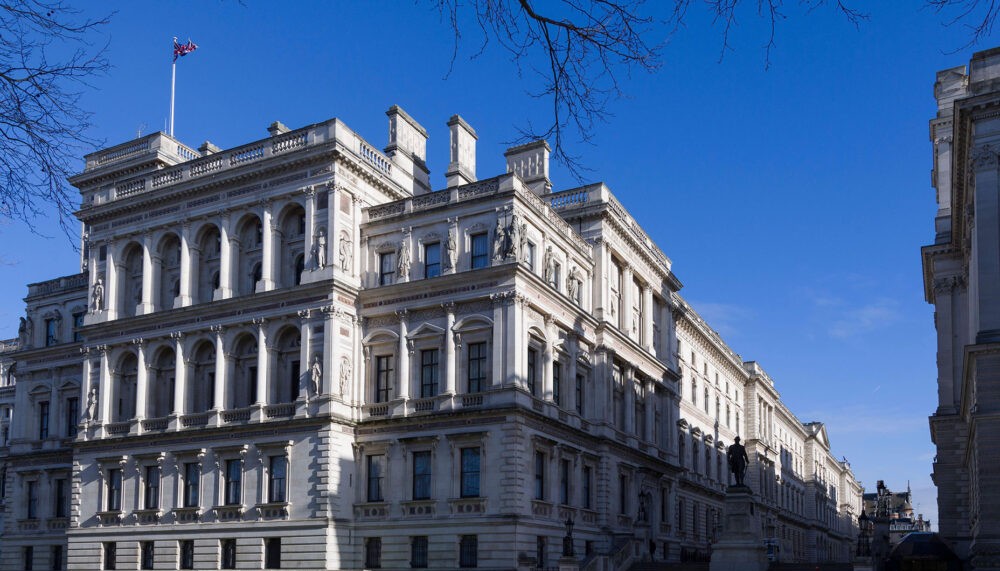
The SPU was overseen by a steering committee that would meet every second month at the unit’s offices on the third floor of a Whitehall office known as the Old Admiralty Building. The Foreign Office was represented, as was MI6 and its domestic counterpart, MI5. Also sitting on the committee was JH Lopez, who was listed as a second secretary (economic) at the US embassy in London. John Hanley Lopez was, of course, a CIA officer.
The SPU’s output was enormous. Each year it would produce about 600 news stories, and briefing documents that journalists could rewrite and present as their own work. During 1984, for example, it produced 626 items, its annual report noting that ‘these were mostly in the form of self-contained, sub-edited pieces ready for direct placement’. Common themes were economic shortcomings in the communist world, the war in Afghanistan, human rights abuses, Soviet-bloc espionage, and Soviet, Cuban and East German interference in African affairs. The multiplier effect of Lion Features’ work was observed with satisfaction: Chinese news agencies were regurgitating SPU material that had been placed in African newspapers.
By this time the SPU’s outlets had been expanded to include the BBC, the Sunday Telegraph in London, the European edition of Readers’ Digest, the Kuwaiti daily Al Anba, Norwegian daily Bergens Tidende, the Svenska Dagbladet in Stockholm, the English-language Indonesian Times, and many more. Sometimes the journalist receiving this material would be in on the game; other times they would not.
The Economist’s Foreign Report, where the SPU said it had ‘established a covert working relationship’ with a journalist, was described as an outlet that ‘has continued to be one of the most consistently rewarding both in the proportion of offerings and in the frequency of their appearance’. This was perhaps no surprise: Foreign Report, whose staple ingredients were said to be stories about ‘spooks and nukes’, had been edited for several years in the 1950s and 1960s by Brian Crozier, a former Reuters and BBC journalist, who explained in his memoir that he had worked often with the IRD and CIA.
That year the SPU continued to run a clandestine mailing operation, sending letters to selected individuals and organisations in the Soviet Union and eastern Europe. It also distributed leaflets raising concerns about the activities in Africa of the Soviet, Cuban and Libyan governments. These leaflets were purportedly published by an organisation calling itself African Union. The recipients were selected political leaders, trade unions, youth groups, Islamic bodies and journalists across the continent. The SPU acknowledged in its annual report that the ‘African Union’, did not, in fact, exist. It was an SPU fiction.
This, bear in mind, was seven years after the IRD was said by the British government to have been ‘disbanded’ and six years after the British media had reported its closure.
* * *
The truth about what happened when the government claimed to have shut down the IRD has been available to the public for some time. It is contained within a small number of Foreign Office files that have been quietly declassified and handed over to the UK National Archives, where anyone can read them. Sir Colin Crowe’s report, for example, has been available at the archives since 2008. The fact that the SPU continued to operate is detailed in a book about the IRD published in the UK earlier this year. But there are more than 15 million files at this vast repository, and they span more than a thousand years of history: few people would be likely to search for material about something named the ‘special producer unit’ unless they had some idea what those words might refer to. The files have effectively been hidden in plain sight.
In fairness to Owen, he did at one point give some indication of what had actually happened. In 1997 – by which time he was Lord Owen – he told an interviewer that a covert unit had continued to operate after the IRD was ‘disbanded’. But the full significance of Owen’s admission appears not to have been grasped at that time.
The Soviets had known about the IRD from the beginning. One of the first people hired by the unit had been Guy Burgess, who would be exposed three years later as a member of the Cambridge Five spy ring. Christopher Mayhew, the Labour MP and Foreign Office minister who had been the principal creator of the IRD, described in his memoir how he hired Burgess in 1948 and then quickly fired him, recording in his file that he was ‘dirty, drunken and idle’. It was too late: Burgess would have told his handlers all about the department’s work, long before he defected to Moscow in 1951. His recruitment, Mayhew conceded, had been ‘an extraordinary mistake’.
But the Soviets appear to have been hoodwinked by the British government’s claim in 1978 that the IRD had been disbanded the previous year. Or at least they said they were. A few days after The Guardian disclosed the existence – and ‘closure’ – of the organisation, the state-run news agency TASS reported on its demise.
Crozier appears also to have been taken in, condemning in his memoir ‘the way Labour had killed off the Information Research Department’. So too was Mayhew. In February 1980, following the Soviet invasion of Afghanistan, Mayhew wrote to Thatcher, urging her to resurrect the IRD, an organisation that had been ‘respected and heartily disliked by the Russians’. Thatcher wrote back saying the Overseas Information Department, the overt body that she described as the IRD’s ‘successor organisation’, was doing a very good job of producing ‘factual and attributable background briefs’ on a range of topics and offered to include him on the mailing list.
But the Special Producer Unit was about to become entangled in a curious affair that would end with the Kremlin discovering all about the IRD/Special Producer Unit sleight of hand. It would no doubt confirm the KGB in its old adage about the British: ‘You can never trust people who live on an island.’
* * *
In early September 1983 a 51-year-old man named Oleg Georgiyevich Bitov boarded an aircraft in Moscow, bound for Rome. He then travelled to Venice. A fluent Anglophone with a professorial manner, Bitov was the foreign culture editor of the Soviet journal Literaturnaya Gazeta and was in Venice to report on its film festival.
Shortly after Bitov arrived in Venice, he vanished.
While most Soviet-bloc defections would be passed over in silence at home, his disappearance generated a number of headlines in Moscow: Literaturnaya Gazeta published two articles claiming Bitov had been abducted and possibly murdered; the journal demanded action from the Italian authorities.
Eight weeks after his disappearance, Bitov surfaced in London, where he announced that he was a defector who had become increasingly angry and frustrated by the Soviet regime. He wrote a series of articles – particularly for the Sunday Telegraph and Readers’ Digest – about the repressive nature of life in Moscow. He was introduced to book publishers, signed a number of contracts and toured the United States. He began to make a substantial amount of money.
The following August Bitov vanished again, this time from his apartment in Kensington, west London. Five weeks later he showed up at a press conference in Moscow, where he had the most extraordinary tale to tell.
The previous year, he said, he had returned to his hotel room in Venice and found that as he entered the light was not working. ‘I paid no attention and stepped forward into the darkness, only to get a terrible blow at the back of my head.’ He said he came around the following morning but was drugged and semi-conscious for a number of days, watched over by an Italian doctor by the name of Giuseppe. Bitov said he was then flown out of Pisa with a British passport in the name of David Locke, which he assumed to be a joke (Locke D). It was also, perhaps coincidentally, the name of the main character in Antonioni’s 1975 film The Passenger, about a journalist who assumes another man’s identity.
Bitov said he had been escorted on the flight by ‘a polite and well-mannered gentleman’. On landing he was taken to a hotel in East Grinstead, Sussex, which he named, and where, he said, the ‘drug treatment continued’. Two or three times a week he was taken to a military base near Brighton to be interrogated. ‘When, however, those Sherlock Holmeses found I had nothing whatever to do with intelligence service … I was offered a well-paid job in the gallery of mud-slinging anti-Sovieteers.’ Maintaining he feared for his life, he said he decided to co-operate, until he had an opportunity to escape.
Bitov disclosed to the journalists at the press conference the names of several of his ‘captors’ and even read out some of their addresses and two telephone numbers for MI5. ‘Responsible for what they called my “literary activity” was a certain Peter Joy,’ he said. This part of Bitov’s tale rings true: Joy had worked for the IRD in London and India, and had run the Special Producer Unit for a while. He is said to have played a role in the IRD attempt to interfere in the 1976 Italian general election to keep the Communist Party out of power.
The Foreign Office was appalled by Bitov’s press conference and summoned the Soviet charge d’affaires, who was told the allegations were ‘absurd and offensive’. In a report to Thatcher, MI5 said Bitov had not been abducted but had approached the British consulate in Venice and had asked for political asylum. He had been taken to Rome and flown to Britain the following day. Some of the introductions to the press had been arranged by Crozier, MI5 reported, and Bitov had made about £40,000 in nine months.
When Bitov’s London apartment had been searched by the police and MI5 it was in considerable disorder, traces of vomit were found and his personal belongings were missing. MI5 told Thatcher that while it was possible he had been kidnapped, it was more likely that he had returned to the Soviet Union of his free will. They also thought it highly unlikely that he had been a KGB plant all along; rather, he had probably decided simply to ‘re-defect’. Bitov had, however, left £40,000 in a British bank account when he vanished, while expensive dental work, intended to correct matters he was said to find embarrassing, were half-completed.
The following year Bitov published a book, which was said to be a bestseller in the Soviet Union, and which was translated and sold in the West as Bitov’s Britain. It is a witty but relentlessly critical survey of a society in which nobody seems to speak any foreign languages, corrupt police officers are investigated by even more corrupt police officers, basic facts about the royal family are never reported, and Private Eye magazine is an ‘establishment scandal sheet … somehow regarded as subversive of the status quo’. Some of its most scathing comments were reserved for the British army’s Special Air Service regiment, which Bitov says won the admiration of the British public by going head-to-head with a bunch of ‘incompetent Iranian students’, but which in rural Northern Ireland is ‘frequently tied down for days by groups of Irish teenagers firing off Guinness bottles …’
* * *
It must be assumed that by the time Bitov sat down to write his satirical book about Britain, he had had a number of conversations with the KGB, disclosing everything he had gleaned about the work of the Special Producer Unit. Meanwhile, around the time the book was published, the plates were beginning to shift beneath his own society’s feet: in March 1985 Mikhail Gorbachev was elected as general secretary of the Communist Party of the Soviet Union. Thatcher had already met Gorbachev and declared publicly that ‘we can do business together’. If the British government was to continue to wage an information war against the Soviet Union and Eastern Europe, this was doubtless a good time to think carefully about how, in future, that war might be fought.
The SPU’s annual report for 1985 is the last that has been deposited at the UK’s National Archives. After that year the flow of declassified documentation dries up. There is another SPU file from 1985 that appears on the archives’ catalogue but it has not been declassified. The catalogue description reads ‘Future of the Special Producer Unit’: it appears a debate was under way. That file has been retained within what is now the Foreign, Commonwealth and Development Office under Section 3.4 of the Public Records Act, which deals with national security concerns.
Last year the FCDO turned down a request to see that file, a request that was made under the UK’s Freedom of Information Act. The Foreign Office said that it was refusing under the exemptions provided in Sections 23 and 24 of the Act. Section 24 deals with national security, while Section 23 concerns ‘information supplied by, or relating to, bodies dealing with security matters’. Much as the twentieth century euphemism ‘friends’ referred coyly to MI6, ‘bodies dealing with security matters’ refers to MI5, MI6 and the signals intelligence agency GCHQ.
It seems likely that in 1985 the propaganda work being undertaken by the Special Producer Unit was folded quietly into MI5 or MI6, or both. From there, the details of the way in which the global public continued to be persuaded that they were, in Sir Colin Crowe’s words, ‘getting something objective, the facts’, may not emerge for decades, if at all.
Donate ← Back to the current issue