When More is Less
This colossal volume of Heaney’s poems ‘almost disguises the fact that he is a poet by entombing his lyric in a mass of annotation, exegesis and “uncollected” poems’.
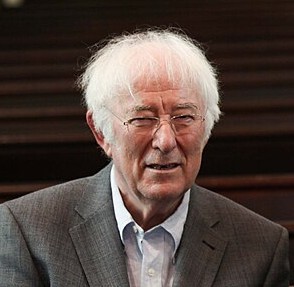
The Poems of Seamus Heaney, Rosie Lavan and Bernard O’Donoghue (eds) with Matthew Hollis Faber & Faber, 1,252 pp, £40, ISBN: 978-0571340385
Seamus Heaney is a wonderful poet who wrote some of the best poems in the English language. Alas, The Poems of Seamus Heaney is not your best buy if you want to discover or rediscover his poetry. This vast book (1,252 pages) almost disguises the fact that Heaney is a poet by entombing his lyric in a mass of annotation, exegesis and ‘uncollected’ poems. Thus the first poem we encounter is not ‘Digging’, which begins Heaney’s debut collection Death of a Naturalist: a poem that both announces and exemplifies a poetry of ‘clean’ sounds, pulsing ‘rhythm’, precise language (‘Nicking and slicing neatly’) and deep probes (‘I’ll dig with it’). Instead we find the apprentice piece ‘Reaping in Heat’, which includes lines like, ‘And the sycamores heaved a sleepless sigh’. I know how they feel.
Heaney’s three editors have worked hard but much of their work seems misplaced: that is, to belong elsewhere. Admittedly, editing collected poems makes complex demands, especially if the poet has not died young (although a collected Keats is no slim volume). Yet perhaps, to quote from Michael Hofmann’s Spectator review, ‘the collected poems of a modern poet should not have an academic turnstile put in front of them’. Faber has form in this matter of undue bulk. Witness the first volume (collected and uncollected) of The Poems of TS Eliot, edited by Christopher Ricks and Jim McCue, which includes almost a thousand pages of commentary. This is ludicrously disproportionate to Eliot’s tiny quotient of poetry. The New Zealand poet-critic CK Stead has called the equally large, if more excusably so, volumes of Eliot’s prose ‘Faber monsters’. Other Faber monsters are the Collected Poems of Ted Hughes (1,333 pages) and Complete Poems of Philip Larkin (729 pages). There’s warrant for the huge Hughes since he wrote so much – too much – owing to a mistaken faith in his shamanistic inspiration. Hughes’s editor, Paul Keegan, wisely confined the apparatus to a hundred pages. But Larkin’s genuinely slim volumes take up only ninety pages of Complete Poems; uncollected poems, unpublished poems and Archie Burnett’s commentary the rest. Burnett claims to have ‘provided, for the first time, a commentary on the poems’. Besides this enterprise being against Larkin’s own grain, its framing seems unfair to previous Larkin critics. And does ‘complete’ in the book’s title edge towards completism? If work that a poet has relegated starts to assume equality with their chosen canon, ‘poetry’ again gets lost. As with Larkin, so with Heaney’s more substantial oeuvre: nearly half this book consists of commentary: clearly a Faber monster word by now.
I must acknowledge, however, that collected poems can also be under-edited. This is the case with Derek Mahon’s The Poems (1961-2020) published by Gallery. ‘The’ reflects the absolutism of Mahon’s editorial role, although he died before the book appeared. But for years his publishers let him get away with revising or discarding poems in a manner that obscured his poetry’s textual history as well as defacing its original impulses. I realise that to question Mahon’s chosen canon is to contradict myself, although revision-obsessed poets (like John Crowe Ransom) might be considered a special case. The Poems spares us commentary but should not erase the dates, titles and character of individual collections, and Mahon’s revisions dehistoricise the poems themselves. He had a disastrous urge to ‘update’ poems, which did not consort with his attitude or aesthetic when he was putting together a new collected (he preferred ‘corrected’) volume. It is impossible to recreate the chemistry of a poem’s composition; timeless poems do not need updating; and Mahon has left his inevitable variorum editor a very difficult task.
I must also acknowledge that I edited the fair-sized Edward Thomas: The Annotated Collected Poems. I believe in notes and critical back-up where necessary. But Thomas died relatively young in a war, having written under-appreciated poetry for only two years – poetry with an unusual prose hinterland – and ‘annotated’ tells you what to expect. (The Faber Eliot, but not the Larkin or Heaney, does have ‘the annotated text’ on its cover.) There is no shortage of critical writing on Heaney, nor is his poetry so esoteric or so historically distant as to need much explication. Nonetheless, his annotators gloss ‘griddle’, ‘scone’ and ‘stooks’. While twentieth century rural Co Derry may indeed seem archaic to city dwellers, the notes tend to over-diagnose localised quaintness in Heaney’s poetry. We are told that the sense of ‘I’ll dig with it’ ‘requires a stress on “it” that occurs in some Northern Irish accents’. No, the line’s effect requires an ear for poetic syntax and rhythm.
The Poems of Seamus Heaney is effectively several books in one: a collected poems; an uncollected poems; a variorum; a bibliographical history (encompassing typography and print runs); a reader’s guide; a critical heritage or running blurb that favours Heaney’s most ‘popular’, ‘best-loved’ poems and most positive reviews. Faber’s main target audience is evidently the academic researcher or university student (sometimes the sixth former), although this book is also designed to look good on a shelf. Perhaps Faber has given up on the common reader – or thinks the common reader has given up on poetry – in an attempt to monopolise Heaney studies, like Larkin studies, by supplying ‘an essential volume for admirers of Heaney’s work’: everything you need to know about his poetry. Hofmann comments that the book’s title ‘makes it sound like a critical work, a book about rather than a book of’.
The most controversial aspect of this ‘definitive edition’, as the editors’ introduction clearly knows, is the inclusion of about two hundred ‘individual poems to which Heaney has given his imprimatur through his decision to publish them in newspapers, journals, magazines, anthologies and with small presses’. Imprimatur, with its quasi-papal resonance, is doing a lot of heavy lifting here. Rather than being gathered into an appendix, the uncollected poems are chronologically sandwiched between Heaney’s twelve collections, as well as before and after. The editors further justify their decision by arguing that ‘the dominance of the twelve volumes marginalises these uncollected poems [and] undervalues the contribution of pamphlets and booklets’, and that ‘the relative spotlight on selected poems leaves an enormous body of work comparatively in the shade’. The justificatory language here replaces the Catholic Church with a different well of virtue: compassion for the ‘marginalised’, the underdog. Pamphlets are not a persecuted minority whose ‘contribution’ to some notional good has been suppressed by full collections. Heaney made choices. Some of his poems are better than others. He usually (not always) knew when a poem didn’t work. The book itself gives an imprimatur to twenty-five unpublished poems chosen by Heaney’s family from his papers. That was a lovely notion, and those poems are properly placed in an appendix. But does further monstrosity or completism lurk in the editors’ reference to ‘a great many’ poems in the Heaney archives that he ‘did not progress into the public space of print’? Again, that false egalitarian ring, as if every word scribbled by Heaney deserves a place on the growing print mountain (‘enormous body of work’ is ominous too). Perhaps the existing volume should be divided into three or four: an accessible collected poems with minimal bibliographical information plus explanatory notes where necessary; a scholarly variorum; an uncollected poems; even Seamus Heaney: The Annotated Collected Poems. Heather Treseler, who reviewed The Poems of Seamus Heaney in the Los Angeles Review of Books, thought similarly, citing the three-volume editions of Elizabeth Bishop and Frank O’Hara. The editors have the nerve to conclude their introduction by claiming: ‘it is Heaney’s own guidance that we have attempted to follow in this edition.’ Might he not agree with Yeats? ‘Accursed who brings to light of day / The writings I have cast away!’
For Treseler, the placing of the uncollected poems is particularly at odds with Heaney’s ‘legacy of rigour’ as regards the architecture of his collections. She instances the juxtaposition of verses on receiving an honorary degree (‘To thank you for my gown and hood’) with the first poem in Seeing Things: a translation from Virgil that features the Cumaean Sibyl’s ‘mad mouthings’. Not only is Heaney’s ‘public man’ verse irrelevant to his artistic trajectory, the added poems blur its outline and weaken its impact. You shouldn’t have to dig for ‘Digging’. Conversely, a missed juxtaposition is that ‘Westering’, the last poem in Wintering Out, is not followed by the first poem in North, ‘Sunlight’. These quatrain-poems would have interestingly aligned different points of Heaney’s compass, but their potential counterpoint is interrupted by several uncollected poems and the experimental prose poems of the pamphlet Stations. Heaney distinguished between what he called ‘bookpoems’ and others. He was also a poet who seems to have written often, and afterwards cut down or cut out, rather than one who recognised, and strangled, failures at birth. To quote Sylvia Plath’s ‘Stillborn’: ‘These poems do not live: it’s a sad diagnosis.’
Heaney could occasionally resemble Mahon in judging his own achievement: some of his successive Selected Poems pass over early poems (‘Saint Francis and the Birds’, ‘Cow in Calf’, ‘Synge on Aran’), while including less concentrated work from later periods. But the uncollected poems generally confirm good self-critical judgement. In some ways they represent a stage further on from drafts, and will interest students of Heaney’s creative processes, if not of his finished art. His juvenilia, suffused with Hopkins and Dylan Thomas (Thomas influenced every young poet in the 1950s and 1960s), have the same kind of interest; but again should not come first in a collected poems. Also, it’s not as if Heaney’s poetic world varies greatly from Death of a Naturalist to Human Chain – hence its power. The additional poems contain few surprises and can read like smudged versions of the real thing. Thus ‘South Derry Evening’ (‘The rain smouldered, / any far hedge a horizon’) and ‘Willow, Ophelia, Moyola’ (‘the sedge and glarry wetness of our meadow’) lessen the force of canonical poems with similar scenarios. Roy Foster’s TLS review is headlined ‘A Wordsworthian journey’. Wordsworthian journeys go more and more deeply into what Heaney calls (in his Faber selection from Wordsworth) ‘the self as subject’: ‘I rhyme, to see myself’. But the self as subject is a poetics that is necessarily reframed rather than reinvented, as when Heaney’s core images appear in narrative or parabolic or visionary guises. Poems that do not deepen the meaning of his world should stay in the shade.
Different hands can be sensed in the notes on the poems. Matthew Hollis no doubt supplied such Faber arcana as ‘the firm’s new printer, Ebenezer Baylis’ botched the first printing of Field Work (1979), despite ‘a meticulously elegant setting in Ehrhardt type – a marked redesign from Whitstable’s iconic Caslon setting of the first four books’. The division of editorial effort may partly explain why the ‘Commentary’ as a whole shifts gear in focus and language. The Death of a Naturalist notes will get you through a school exam as they track ‘recurrent gun imagery’ and ‘a number of fish poems’; but variant printings, ‘iconic Caslon setting’ and a detailed account of the making of ‘Station Island’ seem aimed at another audience. Given such coverage, there might be rather more information about the relation between Heaney’s poems and poems by other poets. For instance, ‘Personal Helicon’ is indebted to Robert Frost’s well poem ‘For Once, Then, Something’; ‘The Other Side’ is in conversation with John Hewitt’s ‘The Hill Farm’; and, as an editor of Edward Thomas, I always feel bound to mention that Thomas wrote two poems called ‘Digging’, and that Heaney was immersed in Thomas when he wrote his first successful poems.
I repeat: Seamus Heaney is a wonderful poet who wrote some of the best poems in the English language. But I am lucky to own all his twelve collections.
Donate ← Back to the current issue