Are we there yet?
Arthur Balfour’s remark on the Irish Free State, ‘What was the Ireland the Free State took over? It was the Ireland we made’; a verdict that contained more than a grain of truth. But it was not the whole story.
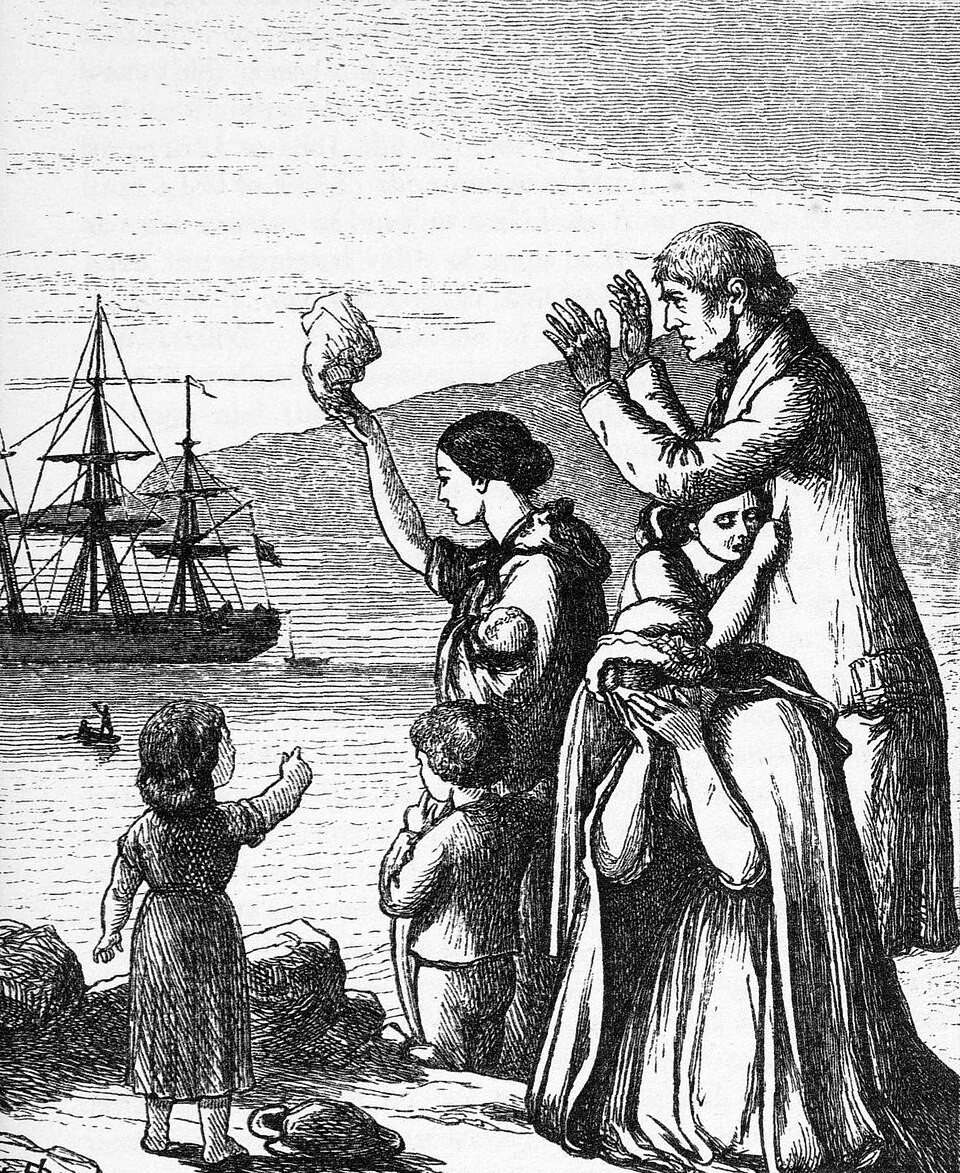
Making Ireland Modern: The Transformation of Society and Culture, by Enda Delaney Oxford University Press, 547 pp, £35, ISBN: 978-0199569823
We seem to have difficulty agreeing when, or indeed if, Ireland became ‘modern’. In 1973 Joe Lee discussed the period from the Famine to 1918 as witnessing ‘the modernisation of Irish society’ (defined as ‘the growth of equality of opportunity’, involving, inter alia, the decline of deference, the growth of meritocracy and of mass political consciousness, and functional specialisation). In 1981 Louis Cullen’s more extended span for the ‘Emergence of Modern Ireland’ was from 1600 to 1900, with a focus on cultural changes and the underlying socioeconomic forces that propelled them. More recently there has been a tendency among certain commentators to identify the break with De Valera’s Ireland and the new departure in economic (and wider social) policy of Lemass-Whitaker from the late 1950s as heralding independent Ireland’s belated embrace of modernity. It rather depends, of course, on what criteria we adopt in defining modernity.
Among historians, the early modernists have perhaps been the most influential chroniclers in recent decades of the ‘making’ of modern Ireland, that is in tracing its decisive turn from the late medieval world to the recognisably ‘modern’, to the convulsions of the sixteenth and seventeenth centuries; with the conquest and defeat of the Gaelic order, inextricably linked with the seismic rupture of Western Christendom by the Reformation and Counter-Reformation; confiscation and plantation of large areas of Irish land, based on religious loyalty; the incorporation of Ireland (with recurring episodes of resistance) into the Tudor/Stuart monarchic state in its early bureaucratic form; and, crucially, with Ireland embedded in a global trade network and the burgeoning Atlantic world.
When the convulsions of the seventeenth century finally subsided, Ireland had been militarily and politically subdued: with a Protestant land-owning ruling class enjoying a monopoly of political and legal power and authority, a substantial community of new planter tenants and tradesfolk, with a heavy concentration in Ulster of privileged Anglicans (Church of Ireland) and of Scottish Presbyterians. A penal code enacted by the exclusively Protestant parliament in Dublin served to exclude Catholics from land ownership, high office (in the law or politics), directing educational institutions in Ireland and much else.
English was the language of the new ascendancy and increasingly a prerequisite for purposeful engagement with the apparatus of power. Urban settlements (old and new) were predominantly English-speaking, though not hermetically sealed from the mainly Irish-speaking inhabitants of the surrounding countryside. This settled society remained generally ‘tranquil’, its economy (in agriculture and manufacturing) on a general growth path until the closing quarter of the eighteenth century, when the dissemination of radical political ideas and demands ushered in an ‘age of revolution’ on both sides of the Atlantic. In Ireland, which was experiencing population pressures and mounting sectarian tensions, it culminated in a bloody rebellion, followed by the Act of Union, by which Ireland was formally joined with Britain in a single United Kingdom.
This is the point of departure for an ambitious and engrossing new study of Ireland’s encounter with the modern by Enda Delaney, for whom the decisive arc of social and cultural transformation in Ireland spans the period from the later eighteenth century to the Great War. His understanding of modernity, as experienced in the Western world, is compendious and uncontroversial, seeing it not as a singular wave of dramatic transformation, but as a protracted and complex process: encompassing (though not uniformly across time or territory) the widespread and systematic application of rational scientific knowledge and new technologies to increase economic production and exchange; the emergence of an industrial society, with rapid urbanisation, and a revolution in transport and communications (‘from the railway to the telegraph’); universal systems of production, involving standardised measurement and management of time, working hours and conditions, and of economic output; a shift in human relationships (economic and other) from the customary to the contractual; from the local (variegated and irregular) to the universal and standard; from an oral to a written culture (demanding, logically, mass literacy); education as a central requirement for the path to progress, and a parallel rise of the democratic spirit. And all within the framework of an accelerating, integrated global capitalist economic system. The cumulative effect of these changes (however unevenly experienced) on cognitive capacity as well as on social and cultural practices is generally taken to represent the shift to the modern in the Western world.
While sensibly considering different versions of ‘modernity’, Delaney does not trap himself into too narrow or rigid an understanding of the concept. The chronological span he adopts allows for the play of particular historical circumstances in the timing, the terms and the contradictions and paradoxes of the Irish encounter with modernity throughout the ‘long nineteenth century’. His focus throughout remains firmly on how this encounter impacted on the everyday lives of ‘ordinary’ people: with ‘the emphasis on the inner experience of those whose voices have not been heard …’
Delaney adheres to a broadly colonialist framework for his consideration of Ireland’s situation within the UK during the ‘long nineteenth century’. Given the focus of his analysis, this proves an apposite and enabling framework. He is not primarily, or at all, concerned with constitutional or narrowly political status relationships, strictly defined as ‘colonial’, but with mentalités. Specifically, the prevalent attitudes, assumptions and prejudices relating to notions of cultural superiority/inferiority, progressive/ backward, civilised/barbarous, characteristic of the colonialist relationship, are identified as clearly present in the ‘Ireland within UK’ setting. It is the working out of the cultural hegemony of the British polity in its pomp, from the late eighteenth century to the Great War, as it impinged upon all aspects of the lives of ordinary Irish people that is the focus of his enquiry.
The three key drivers of this transformation are, firstly, the economic engine (and social logic) of the global capitalist economy, and Ireland’s embedding in the world’s leading industrial economy and society, and in the metropolitan core of an expanding global empire. While an urbanised industrial enclave emerged in the northeast (around Belfast), ‘agricultural exports were [principally] Ireland’s distinctive contribution to industrial capitalism’.
Secondly, there is the impact of the ever-expanding reach of the state into the lives of the population during the nineteenth century. This occurred in the areas of law and order, education, provision for the poor and, in time, state-funded transfer of land ownership, ‘development’ measures for the poorer communities in congested regions, late in the century. Whatever the immediate (or even strategic) political objectives of these serial state interventions (dealing with Irish disaffection by the repeated mixture of ‘coercion and conciliation’), the cultural effect was to reinforce the necessity for adopting new ways and language: modernisation and anglicisation were closely aligned.
And, lastly, the role of the churches – in particular, the Catholic Church of the majority – was crucial in a society strong on religious belief and identity among all denominations. The spectacular organisational expansion (personnel and building schools, charitable institutions, etc), and the impressive standardisation of devotional practice (discipline, decorum, conformity – the triumph of the canonical over the customary) of the Catholic Church in Ireland from the early Victorian era is by now a familiar story. A church, theologically unadventurous, increasingly wedded to Victorian bourgeois manners, with convents and seminaries as seedbeds; preponderantly English-speaking, servicing an anglophone empire (and a sizeable Irish diaspora) awaiting evangelisation and pastoral care; a confident missionary church. The largely British-prompted Protestant evangelical missions to the Irish poor brought limited conversions and sporadic controversy, but hardly affected the wider cultural disposition of Irish Protestants. And the intense spasm of fervour of the 1859 religious revival, did not portend any fundamental departure from the Bible-based and local chapel devotional culture of Ulster Presbyterianism.
These are the key drivers of cultural transformation that Delaney identifies as shaping Ireland’s encounter with modernity. A demographic frame may be helpful in assessing this transformation thesis. The population of Ireland in 1780 was about four million, already rising from mid-century. By 1820 it had increased to about 6.8 million. The rate of growth slackened in the 1830s (as emigration rose), but by 1841 the population had reached close to 8.2 million. The Famine, triggered by the failure of the potato crop, decimated the rural underclass (labourers, cottiers and poorer smallholders), and by 1851 the population had fallen to 6.55 million. It continued to fall in the decades that followed, powered by high rates of emigration, so that by 1911 it was down to 4.4 million. The social structure of Irish rural society was transformed – drastically by the Famine deaths and emigration, and remorselessly by emigration in the following decades. As the balance of the rural economy shifted away from labour-intensive tillage to pasture, the rural labouring class inexorably melted away; the small farmer and cottier classes thinned out by emigration. Rural Ireland – its local manufacturing base increasingly obsolete in the face of cheap mass-produced imports – became preponderantly an agricultural society.
The ‘teeming’ society of pre-Famine Ireland, with its status-tiered elements (landlords, strong farmer, middling tenants and the small farmer, cottier and landless labourers), frequently contending to assert their distinctive interests, by law or by violent combinations, was decisively reconfigured after 1850. The desperate, boisterous, underclass – their values, violence and ways of thinking and acting – was relentlessly thinned by emigration and progressively tamed by the norms of respectability and discipline promulgated (and practised) by their leaders and betters. The Catholic middle class, as it consolidated its institutional and moral dominance over cultural and social practice throughout rural Ireland from the 1850s, was in lockstep with the state in ensuring ‘the control of public behaviour’, a key element of the civilising mission of ‘progress’. The abolition of the notorious Donnybrook Fair (1855) and the purging of the excesses of St Kevin’s at Glendalough or a host of local ‘pattern’ days, testified to the project of taming ‘the landscapes of belief’ and bringing order to all assemblies of leisure.
Tracing this shift in social and cultural power and practice in the lives of ordinary people during the long nineteenth century is an ambitious undertaking, demanding an assured command of relevant literature across a wide range of disciplines – cultural geography, folklore and anthropology, historical sociology and, of course, Delaney’s own discipline, history. His cast of contemporary witnesses, from the later eighteenth century onwards, includes several familiar commentators on cultural practices and ‘the manners’ of different social classes – Edward Wakefield, John Gamble, Hugh Dorrian, Amhlaoibh Ó Súilleabháin – and the usual suspects among the authors of travellers’ accounts of their journeys in Ireland; together with the judicious use of evidence presented to official enquiries during the Union era. The outcome of his efforts is a sweeping and insightful tour d’horizon of what many may have thought of as familiar territory.
We find, for example, that the ‘militarisation’ of Irish society relates not simply to the security role of the army (vital though this was), but more widely to embedding military values and virtues (duty, order, discipline, respect for authority) in different areas of civilian life (including, in time, organised sport). Again, the deployment of evidence in exploring the transformation of the sensory world of ordinary people (the changing soundscape, sense of smell, touch, vision and awareness of the physical environment) is sensitive and richly suggestive. And, as one might expect from a diaspora specialist, the complex impact of emigration is elucidated throughout with clarity and authority.
A central feature of global capitalism, emigration is indisputably a core element in the strictly demographic story of modern Ireland, but also crucial to the transformation of the class structure of rural Ireland in the decades after the Famine. Its wider cultural impact was even more pervasive. As emigration became an integral part of the horizons of ambition and expectation of ordinary Irish people, the loop between those who had left and those at home – letters, remittances and returned emigrants – was replete with cultural implications: the flow of ideas, dreams, observations, imaginings of alternative worlds, producing a crucial ferment of cultural relativism.
****
The salience of gender in Delaney’s story of transformation proves more challenging. The lived experience of women in Ireland in the long nineteenth century was mediated, indeed largely determined, by social class and marital status – in household settings, in work and in leisure. Changes in life expectancy, marriage and fertility rates, child mortality and family size; these and related aspects of women’s experience lie at the heart of any prospect of cultural transformation.
The advance of women to professional roles in the public sphere was slow, while formal political participation came very late in the UK’s march to modernity (the parliamentary franchise did not come to women until 1918). But the changes in the structure of the rural economy and in the world of work (rural and urban), together with the accelerating changes in the retail world and consumption patterns in the closing decades of the nineteenth century, were far-reaching: in housing (space, light, furnishings and household goods, hygiene and privacy), work on farm and in factory, in the increase in the volume, variety and distribution of mass-produced goods. What was the differential impact of such changes on the lives of Irish women of different social rank and circumstance as Ireland ‘transitioned’ to modernity? The central role of education is not in dispute. Specifically, historians are at one in acknowledging the influence of the expanding number of nuns (and convents) in shaping the horizons of ambition and the norms of behaviour for Irish girls (in primary schools) and young women (in secondary schools, where a touch of Gallic deportment was added to the dominant Victorian values inculcated by the native Irish congregations, for poor and middle class alike). Delaney addresses many of these issues in several chapters, at once concise and considered in his comments. But the book might have benefited from a specific chapter on the gender aspect of the transformation.
****
In Ireland, as elsewhere, the forces of modernity did not result in the total eclipse of established traditional cultural modes. Delaney (in common with many cultural theorists of recent decades) finds ‘the recurring “dichotomy” between “tradition” and “modernity” … much too homogenizing’, preferring the ‘grey zone of the dynamic of the unstable interactions between the old and the new’, the endless adaptation and accommodations. The powerful wave of Victorian bourgeois culture (capitalist in economic base, with a behavioural premium on discipline and decorum, regularity, respectability and restraint) repeatedly broke against deeply embedded cultural rituals and everyday practices – relating, for example, to death or the popular respect for good and bad omens. In truth, wherever one looks, the encounter with modernity is replete with paradox. The mission preachers, shock-troops of the new devotional conformity and regularity, generated a lively market for relics, scapulars and related religious objects. The suppression of the folk magical was accompanied by the licensing of the miraculous. Nor is paradox only to be found in the rural and the folk redoubts of the countryside. Belfast, Ireland’s prime urban industrial exemplar of the economic embodiment of modernity, incubated visceral ethno-religious antipathies that invaded every aspect of life in the city.
The vernacular language shift would seem, on the face of it, ready-made for consideration within a colonialist framework. The language shift was, of course, a protracted affair. By the late eighteenth century those who (through education or other advantage) were intent on getting on in the world, functioning effectively in the administrative, legal, commercial or political spheres, had adopted English and were ensuring it became the vernacular of their children. The coping classes had turned to English while Irish was the dominant (or sole) vernacular of the poorer classes, the classes among whom population increase was heaviest in the pre-Famine decades.
The Famine was the brutal accelerator of the long-term vernacular shift, with its high mortality rate among the poorer, Irish-speaking communities. But it also intensified anglicisation in other ways. In addition to the drastic reduction of the rural underclass through emigration in the succeeding decades, it is likely that it induced a sense of shame and loss of belief in the wisdom (gaois) and life knowledge encoded in the language that had been cruelly exposed as unavailing in a time of calamity. The adoption of the ‘new culture’ was the future – whether in coping at home or preparing to prosper in a new land.
Recent scholarship on the language shift has stressed a more abundant bilingual world of communication in the century before the Famine than was previously believed; in lower law courts, informal commercial transactions, contacts between manuscript scribes in Irish and the world of scholarly or antiquarian interest, and in a generally busier highway for traffic between the oral and the written. But the underlying language shift was in one direction only. Use of Irish in the lower courts was on practical grounds, as also with Irish language competence required of priests ministering in predominantly Irish-speaking communities (especially in western districts). Such accommodations were understood as temporary or transitional: permitted or deemed necessary only until the process of anglicisation in speech was complete, as it assuredly must be ere long.
Yet even in the language shift, where cultural hegemony seemed almost complete and irreversible, stirrings of reaction and resistance began to register – as a strand of wider Celtic and ‘nativist’ revivalism – by the turn of the century. One recalls, on closing this absorbing book, Arthur Balfour’s well-known comment, in his twilight years, on the Irish Free State: ‘What was the Ireland the Free State took over? It was the Ireland we made’; a verdict that contained more than a grain of truth. But it was not the whole story.
Donate ← Back to the current issue