The Odd Couple
A new study of the intense rivalry between Charlie Haughey and Garret FitzGerald suggests it may have ended up being a force for good for the country as a whole.
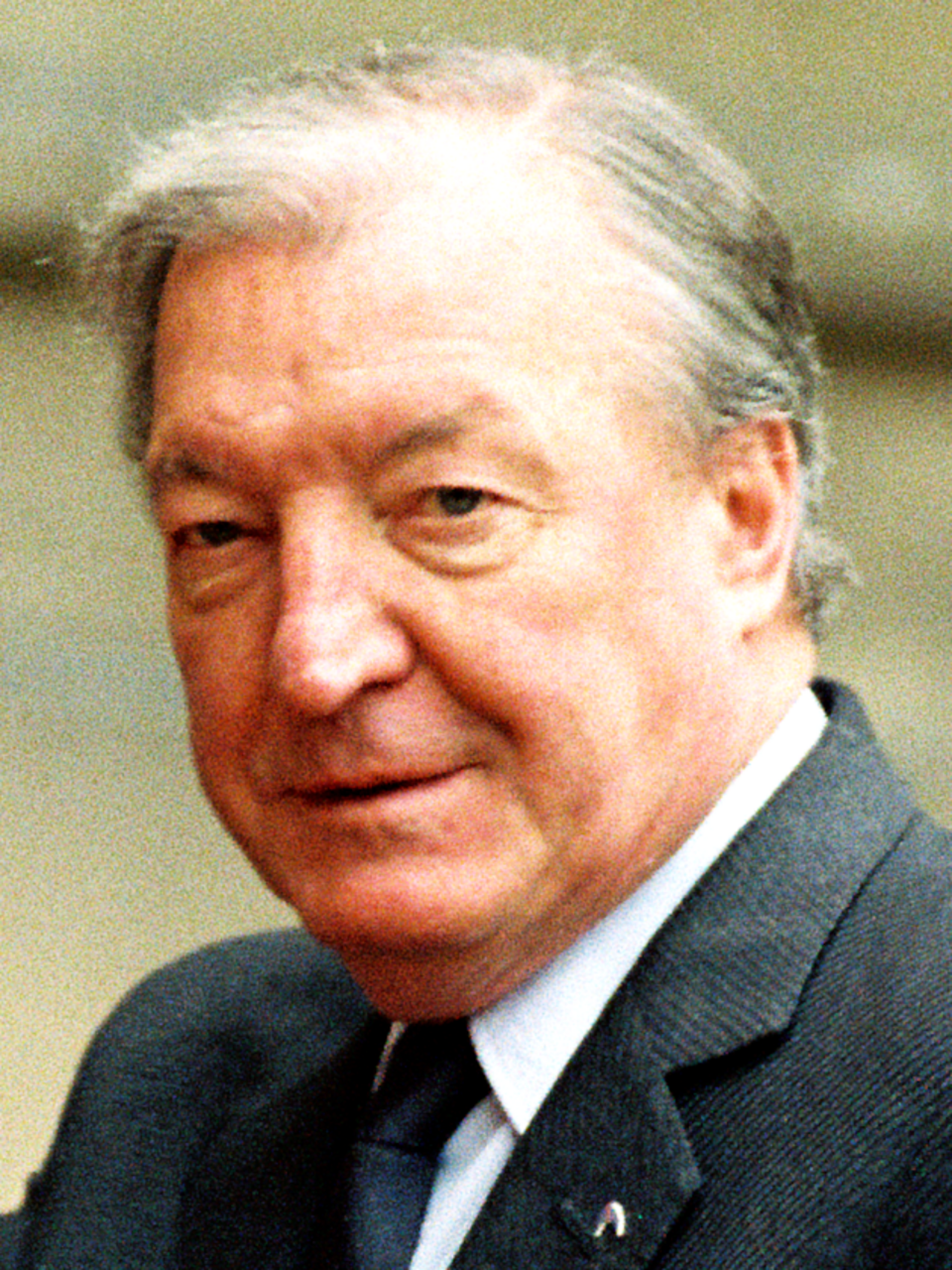
Charlie vs Garret: The rivalry that shaped modern Ireland, by Eoin O’Malley, Eriu, 353 pp, €23.99, ISBN: 978-180442685
Ireland in the 1970s and 1980s was a very different place from the Ireland of today. The country suffered from a severe economic recession, high unemployment and a massive public debt following unsustainable government borrowing. The outbreak of the Northern Ireland Troubles brought the issue of reunification to the fore, and a long search for peace began. Attitudes to social issues, especially women’s rights, became more liberal, marking a slow transition from a theocratic state to a more pluralist society. It was also a turbulent time in Irish politics, with changing party leaderships, multiple general elections and government instability. In this riveting book, Eoin O’Malley examines Irish politics during these decades by tracing the political fortunes and rivalry of the two major party leaders, and taoisigh, Charles J Haughey and Garret FitzGerald.
O’Malley’s thesis is that ‘competing political leaders influence each other’. The argument is that Haughey and FitzGerald influenced and constrained each other’s political agendas. Their competition and the decisions they took arising from that rivalry had real consequences for the people of Ireland. Indeed, in O’Malley’s view, their contestation restricted them from taking the actions necessary to solve the country’s thorny problems. This gives us an important clue as to the relevance of this book beyond a study in individual political leadership, as both personality and context influenced ‘their rivalry and how they interacted, [and] significantly shaped modern Ireland’.
In fifteen page-turning chapters, O’Malley explores his thesis in depth, based on extensive research, with copious references accompanying each chapter. It is informed by his interviews with politicians, civil servants, advisers, and with the two central characters, Haughey and FitzGerald. This primary research is supplemented with documentary evidence from many Dáil debates as well as Irish and British state papers. To flesh out the story even further, the author draws on numerous contemporaneous newspaper articles and books that delve into the politics of the time. If one has a quibble, it is with the index, which is less comprehensive than the research and storytelling, making it difficult to be guided to key documents or significant events in a book that deals with many strands of the Haughey-FitzGerald interaction.
The book begins in 1979, when the death of two Cork-based TDs, one Labour and one Fianna Fáil, brought about by-elections in Cork City and Cork North-East. The chapter, evocatively titled ‘Flawed Pedigree’ after Garret FitzGerald’s famous speech, describes the Fine Gael campaign strategy of using Garret as the ‘face’ of the party. The Fine Gael strategy was based on Fianna Fáil’s 1977 general election campaign, which introduced a ‘presidential’ style of electioneering borrowed from American politics and placed taoiseach and party leader Jack Lynch front and centre. The strategy paid off for Fianna Fáil in 1977 – it was returned with an overall majority of eighty-four seats – and it was successful for Fine Gael in 1979 when it unexpectedly won both by-election seats. This hastened the retirement of Jack Lynch and opened the path for Charles J Haughey to succeed him. These were the moments in which Irish political campaigning was brought into the twentieth century. It is a fitting opening to a drama-filled story, documenting the intense mutual competition between these two charismatic political leaders.
In the Dáil debate on Haughey’s election as taoiseach in December 1979, FitzGerald (then leader of Fine Gael, the largest opposition party) sought to block his nomination with a speech that focused on Haughey’s character, not his politics: ‘Deputy Haughey presents himself here, seeking to be invested in office as the seventh in this line, but he comes with a flawed pedigree.’ It was a memorable phrase, a cutting accusation regarding his rival’s character and his motives for seeking power. That moment crystallised FitzGerald’s brand as a politician of integrity and Haughey’s image as untrustworthy. These characterisations, which like all reductive descriptions were based on a kernel of truth, were to remain in the public mind throughout their decade of competition. They continue to frame the popular perceptions of both men.
The introductory chapter sets out the meta-narrative that both men were foils to one another throughout their political careers. Yet even at this early point, the author seems more interested in relating the colourful Haughey saga than in delving into the less controversial character of FitzGerald.
One can see why. Haughey’s life was full of drama, at times arising through circumstance and at others engineered by the man himself. He was a compelling player on the political stage, with a thirst for power that brought him from the margins of political life following the Arms Crisis of 1970 to the heights of politics as party leader and Taoiseach. FitzGerald in contrast, while equally ambitious for power, is portrayed as more of an academic than a politician, easily distracted by novel ideas, revelling in detailed policy debates and lacking the ruthless political instincts of Haughey.
After the introductory chapter has established the general direction, O’Malley’s book is organised thematically, dealing in turn with each man’s origin story, their handling of internal party tensions around their leadership and their approach to addressing critical challenges facing Ireland during their leadership careers. Along the way, the book brings nuance and insight into this long political relationship. For example, it records that FitzGerald canvassed Haughey for a vote in the 1965 Seanad election, and that around the same time Haughey sought to enlist FitzGerald’s policy skills in a consultancy for Fianna Fáil. In both cases, the approach of the other was turned down, though the exchanges convey no animosity. Perhaps this early friendly understanding is based on a trait they shared as reformers – FitzGerald seeking to transform Fine Gael into a liberalising electoral force, Haughey with a ‘desire to see Ireland enter the twentieth century’. In recognising their reformist inclinations, the author describes FitzGerald as an ‘optimist’, Haughey as a ‘pragmatist’. This is not a fully accurate summation of their characters. In the book Haughey comes across as much more of an opportunist in his quest for power and desire to destabilise FitzGerald’s leadership, though it is true that when he held ministerial office he generally took a pragmatic approach to what he could achieve in that role. FitzGerald’s appellation as an optimist is nearer the mark, though as the story unfolds we see instances of the unrealistic nature of this optimism that highlight his lack of political judgement.
The book gives good accounts of both men’s early political careers and the context in which they came to lead their respective parties. It gives ample space to the dynamics of the seminal events that shaped Haughey’s public life in the 1970s, culminating in the Arms Trial. The treatment of this plot to import arms for use by republicans, in which Haughey was implicated, brings one of the major themes of the book to the fore – the conflict in Northern Ireland. This issue was to preoccupy FitzGerald and Haughey during their periods as taoiseach, and the book outlines the efforts each made to achieve progress towards peace. It contrasts the strategic positions of both leaders on the Northern Ireland question. While both wanted reunification, they differed in their fundamental approach. Influenced by the Social Democratic and Labour Party (SDLP) leader, John Hume, and by his own Northern Protestant roots, FitzGerald’s view was that it would be driven by the people of Northern Ireland. He was highly antagonistic towards Sinn Féin and the IRA, believing they had no right to a role in the peace process. Haughey’s approach was to follow a dual-track strategy. One aspect was to leverage the institutions of the Irish and British governments to solve the matter. The other dimension was to engage, via trusted intermediaries, with Sinn Féin and the IRA at a time when republicans were deemed to be political pariahs.
These different views as to where the solution to the conflict might lie resulted in divergent initiatives. As taoiseach, FitzGerald sought to forge closer bonds with both Catholic and Protestant communities and their political representatives through the New Ireland Forum. The ensuing Forum Report presented three possible solutions for ending the conflict – ‘a unitary state, a federal/confederal state and joint authority with the British’. Haughey’s interpretation of the Forum Report focused on an alternative answer: ‘unity with a new constitution’. This position created tensions within Fianna Fáil which led to Des O’Malley, Eoin O’Malley’s father, being expelled from the party for opposing Haughey’s policy position. In the meantime, FitzGerald’s efforts were undermined by UK prime minister Margaret Thatcher, who responded with a declaration of ‘Out, Out, Out’ to the three potential solutions. Nonetheless, despite the fraught relations between all involved, Thatcher, with some nudging from American politicians via President Ronald Reagan, came to the negotiating table with FitzGerald. From this engagement the 1985 Anglo-Irish Agreement was formulated and signed. This was perhaps FitzGerald’s finest hour as taoiseach.
The search for peace also highlights the opportunistic side of Haughey’s politics. When in opposition he ‘categorically rejected’ the Anglo-Irish Agreement, sought to undermine it by lobbying US politicians to oppose it and expelled Mary Harney from the party when she supported it in the Dáil. As the author points out, if Haughey ‘had opposed the Anglo-Irish Agreement, [that was] for tactical reasons, and the vanity of not liking to acknowledge another’s success’. Yet, as taoiseach, following the demise of the Fine Gael-Labour coalition, he sought to make it work. The book recounts that process, including his authorisation of secret negotiations with Sinn Féin that ultimately led to the Sinn Féin commitment to non-violence, an IRA ceasefire and the 1998 Good Friday/Belfast Agreement.
The book also dramatically conveys the slow shift of Irish social culture out of the conservative, theocratic mould it had been in since the 1920s. This is most explicitly charted through the contentious abortion and divorce referendums held in a conservative Ireland of ‘moving statues and judgemental attitudes’. As well as providing an insight into the slow shifting of Irish cultural mores, both referendums illustrate the political dynamic between FitzGerald and Haughey.
The referendum on a constitutional ban on abortion was put forward by the Fine Gael-Labour coalition under FitzGerald – a matter that FitzGerald is said to have regretted ever after. In pushing for adoption of the Fianna Fáil/Pro Life Amendment Campaign (PLAC) wording, Haughey manipulated FitzGerald’s fears of divisions in Fine Gael between conservatives and liberals. This strategy rendered FitzGerald ‘defensive and indecisive’, unable to get consensus in his party for an alternative formulation. The outcome of this complex power-play was that the referendum was based on the Fianna Fáil/PLAC text. The referendum delivered resounding support for this Eighth Amendment and undermined FitzGerald’s reforming ‘constitutional crusade’, as Haughey had intended. The policy implementation of this constitutional provision was to dominate politics for subsequent decades.
In the divorce referendum too, Haughey’s opposition was based on pure political calculation rather than on a principled stance. The conservative wing of Fine Gael also campaigned for its defeat, summarised in Alice Glenn TD’s memorable slogan ‘A woman voting for divorce is like a turkey voting for Christmas’. The measure to remove the ban on divorce from the constitution was defeated, again by a two-thirds majority.
The author argues that FitzGerald was responsible for the outcome of both referendums ‘because he did not exercise political leadership, skill or good judgement during these episodes’. This harsh analysis has an element of truth, as, according to O’Malley, FitzGerald’s period as taoiseach overall was marked by a lack of focus, an inability to make decisions efficiently and a mismanagement of cabinet tensions. Indeed, there is plenty of corroborating evidence for FitzGerald’s weakness as a leader. While he centralised power in the taoiseach’s office (as did Haughey), he used this control to meddle in other cabinet briefs rather than to shape and steer a coherent wider vision for his ministers. Yet the wider context was also against him. The Fine Gael-Labour coalition he led from 1982-1987 was faced with a conservative public, the mighty influence of the Catholic Church, and the opportunistic opposition of Fianna Fáil to any reforming measures.
Haughey’s and FitzGerald’s inability to develop a strategy for addressing the country’s significant economic challenges during the 1980s is dealt with in some detail. Haughey failed to spend the country out of recession during his periods as taoiseach, while FitzGerald resisted negotiating a wage pact with employers and trade unions, even though Fianna Fáil and Haughey would have supported a measure of this kind. The collapse of the coalition government in 1987 is put down to the lack of agreement on the budget. During these sensitive cabinet negotiations FitzGerald’s inability to focus on the problem at hand was brought to light when, incredibly, he ‘brought a memo to cabinet to change the electoral system’. In contrast, Haughey’s behaviour in opposition is presented as focused on one objective – to undermine and unseat FitzGerald as taoiseach so that he could assume the office. As the author explains: ‘In this period, Haughey was constantly trying to cause difficulties for FitzGerald, and he frequently succeeded … But for Ray MacSharry, too often it was “opposition for its own sake, which … had damaged the party’s credibility”.’ Even during the 1987 election campaign, Haughey opposed FitzGerald’s belated swingeing plans for economic reform, yet when returned to government after this election he adopted these plans in the Programme for National Recovery. This action brought wage restraint, tax cuts, a focus on reducing the public deficit and economic stimulus that laid the ground for the revival of the 1990s. This is recognised as Haughey’s singular achievement of note, which would not have been possible without his skill in building a social partnership consensus that endured long after he had left office. O’Malley is fair to both men in his evaluation: he recognises that it was FitzGerald’s idea, put into effect by Haughey.
The personality failings of both men are treated in an open, even-handed manner. The book is highly critical of FitzGerald, who is accused of being an ‘intellectual snob’, and of his lack of focus as a political leader and his strategic naivety in not preparing the ground for any of his flagship efforts to modernise public policy. In FitzGerald’s own words, ‘I have always involved myself in controversy, argument and debate.’ Yet the account shows respect for FitzGerald’s personal integrity. In the case of Haughey, the author recognises his significant policy achievements when in office, while accusing him of normalising crony capitalism, of ‘skimming off the top’ and of secretly accepting donations of millions of pounds from private businessmen.
To return to the book’s central thesis – that Haughey and FitzGerald influenced each other’s strategy and scope for action. The evidence marshalled by O’Malley is compelling: Haughey is clearly and cogently presented as a figure determined to frustrate and block FitzGerald and his government’s plans while FitzGerald’s main purpose during the many election campaigns they fought is effectively portrayed as motivated by a desire ‘to limit the chance that Haughey would get an overall majority’. In this, FitzGerald succeeded, denying Haughey the prize he so desperately wanted. The book ends on a poignant note, with an image of two old political foes finally reconciled – ‘we didn’t talk politics, there was no point in that’.
Charlie vs Garret is a compelling account of Irish politics through the lens of the two titans who were active through the turbulent decades of the 1970s and 1980s. Each man held the other in his sights, and from this rivalry the country was finally put on the path to a modern economy, a relatively progressive culture and peace and stability on the island. The winners, in the end, were the people of Ireland.
Donate ← Back to the current issue