The Rise of Miserablism
Another look at the rise and fall of modern Britain from the postwar ‘golden age’ to the decay that set in following the ‘winter of discontent’ of the late 1970s.
The Land Where Nothing Works: How Britain Lost the Plot, by AG Hopkins Princeton University Press, 288 pp, £25, ISBN: 978-0691283630
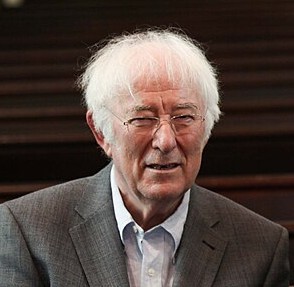
Anthony Hopkins is a historian based at Cambridge for much of his career. His substantial output of books and journals has mostly concerned the British empire in the nineteenth and twentieth centuries. ‘This book’, says his opening sentence ‘is the last I shall write’ due to advancing age. He recently celebrated his eighty-eighth birthday. There is no sign of his skills as a historian declining with age. His latest work is a perceptive survey of recent British history, examining, as he puts it, the past that shaped his life. He was born in London during the Second World War, then benefited from the postwar welfare state, especially the National Health Service (NHS) and expanded state education, ‘miracles that opened possibilities for a new generation’. But, ‘When the postwar settlement was overturned in the 1980s, my world sank like Atlantis and has never resurfaced.’ As Thatcher’s damage appeared unstoppable, he decided ‘reluctantly’ to leave Britain for a professorship in Geneva, returning years later ‘for family reasons’.
The book studies these two decisively different periods: the ‘Golden Age’ of Labour-led social democracy from 1945 to the late 1970s; and, as its title suggests, the ‘decay’ that followed from 1979 to the present, concluding with the July 2024 election. It is a story of a ‘Brave New World’ declining into ‘the current malaise that now infects every aspect of British life’.
The first chapter describes this ‘malaise’. Public services near collapse, staff underpaid, an NHS ‘on its knees’, education underfunded, universities in debt, privatised utilities paying high salaries for poor performance. Greater inequality and poverty than in comparable countries in a declining economy, with ‘food banks one of Britain’s notable growth industries … because public provision is inadequate’. Only the United States is more unequal among developed economies, yet successive UK governments followed its model rather than those of more equal European states. Decline has fostered popular disillusion with politics and politicians, who have lost the sense of public commitment that once drove them and now represent only their own interests.
Hopkins carefully analyses what changed over time and why. The political, economic and social systems that emerged in the nineteenth and early twentieth centuries, creating democracy, industrialisation, prosperity and trade, made Britain a major world power led by ‘gentlemen’ with a sense of responsibility to the community. Britain’s economy and world status declined from 1918 as rivals such as the US and Germany developed, but survived Britain’s victory in two world wars strongly enough to enable Labour after 1945, in majority government for the first time, to create a transformed culture. It introduced a managed economy bringing nationalisation and increased efficiency of key industries, full employment for the first time in peacetime, economic growth following inter-war depression and wartime disruption, and the highest direct taxes of the century. This facilitated development of what became a ‘welfare state’, providing universal free healthcare, improved free education and high-quality subsidised housing. Hopkins is clear about the difficulties of building a successful economy at a time of continuing high defence costs and a disintegrating empire. Throughout he is better informed about the economy than about social policy and conditions. He overlooks how Labour was unable to achieve all its ambitions. Pensions and other benefits were set at lower rates than Labour, or William Beveridge who proposed the reforms, wished and poverty persisted. It hoped to remain in government long enough to grow the economy and the welfare state further.
Labour was thwarted by narrowly losing the 1951 election. With an exceptionally high turnout of 82.5 per cent, Labour won over 200,000 more votes than the Conservatives but twenty-six fewer seats. The size and closeness of the result indicates that voters were committed to politics but deeply and evenly divided, with middle class Conservatives resenting the continuing high taxes and controls upon consumption that enabled growth, while they took more advantage of free healthcare and free selective education than working class people.
Hopkins surveys how Conservative governments, 1951-1964, did not destroy the ‘Golden Age’. Full employment survived to the 1970s, living standards continued to improve. He could have provided a clearer account of how the welfare state broadly survived but did not improve. Some Conservatives had always criticised an NHS wholly free to users and the government established a committee led by economists to review it, expecting them to recommend privatisation. To their surprise, the Guillebaud Committee in 1956 reported that it was the most cost-effective health system in the world and should be preserved. Conscious of its popularity with voters, the government gave in and the NHS survived. The Conservatives boasted of building many more council houses than Labour, but they were of inferior quality and increasingly in unpopular high-rise blocks. They did not raise pensions or other benefits, which fell in value as prices rose, and tax incentives encouraged employers to introduce generous occupational pensions, mainly benefiting better-paid men.
The assessment of the Conservative governments during this period is broadly positive. Hopkins comments that they sought to appeal to women voters. He does not give details, but in 1955 they introduced equal pay in the public sector, which women had long demanded. In 1958 women achieved another long-sought-for demand when they entered the House of Lords as part of a rather surprising Conservative reform: appointing life peers (and baronesses) to the previously hereditary House. He states, without evidence, that child poverty declined under the Conservatives. The leading poverty survey of the period, the ‘Rediscovery of Poverty’ as it became known, by LSE academics Brian Abel-Smith and Peter Townsend was published in 1965 but is not mentioned. It used data from 1953-1954 and 1960, and concluded that the number of people with incomes below a strict poverty line rose from almost 4 million to almost 7.5 million over this period. At least two million children were in poverty in 1960, causing widespread shock when it was revealed. Three million retired people were in poverty, but this was expected, whereas it was widely believed that Labour had largely abolished family poverty. They had not, and under the Conservatives it rose rather than fell.
There was sufficient continuity between the two governments for it to be described by some historians as ‘consensus’ between the ruling parties. Other historians, myself included, have pointed out differences between the parties during this period. Total agreement there was not, but that so much of Labour’s policies survived what the party in 1964 called the ‘thirteen wasted years’ of Tory government, suggests a much higher level of agreement between the parties than we can imagine in 2026. The current Conservative leader, Kemi Badenoch, and her colleagues seem only to shriek with hostility against any Labour policy, illustrating the major change in British politics over time and which is the core of the book. Hopkins defines 1945 to the late 1970s as a period of ‘qualified consensus’, a more accurate and helpful description. He describes how ‘One Nation Tories’ predominated in the party leadership, men dedicated to national unity in a still hierarchical society and raising living standards, unlike their recent successors.
Labour returned to government in 1964, initially in a minority, gaining a clear majority in 1966. Britain was still much divided. The prime minister, Harold Wilson, aimed to fulfil his predecessors’ ambitions to expand the economy and welfare. His hopes were unfulfilled, Hopkins believes, because neither political party understood the obstacles. Manufacturing was declining under pressure of competition from revived postwar economies, especially that of West Germany. He refers often to ‘Britain’s notorious productivity puzzle’: it is persistently low and he can suggest no explanation. Defence spending was exceptionally high, as Britain supported the US in the Cold War, though Hopkins overlooks Wilson’s refusal to join the Vietnam War. Labour invested in postcolonial development to preserve the Commonwealth as colonies gained independence, and from 1968 it also faced the cost of the Troubles in Northern Ireland, part of the growing divisions within the UK and which is another theme of the book.
Hopkins does not point out that Labour was also severely constrained by unexpectedly inheriting a £800 million financial deficit from the Tories, similar to its successor’s experience in 2024. Nor does he describe Wilson’s serious efforts to develop the economy. He established a Department of Economic Affairs (DEA), responsible for long-term economic planning, which produced a National Plan setting targets and advising industry on investment, output and productivity. A Ministry of Technology was created to encourage UK manufacturing to take advantage of contemporary innovation. It successfully stimulated technological change and increased efficiency in nationalised industries including postal and telephone services, and sponsored development of four key industries: computing, electronics, telecommunications and machine tools. It collaborated with France to produce the supersonic jet airliner Concorde, which was not a commercial success. Mintech, as it was known, was more successful than the DEA, many of whose activities it absorbed when it closed in 1969. Business schools were established in London and Manchester to improve the comparatively poor quality of British business management. These changes did not lead to the long-term growth Wilson hoped for, partly because his government lasted only six years until 1970. Fundamental change takes time, but rising living standards and full employment continued.
Nor did Wilson develop welfare as he hoped, owing much to the inherited deficit. He did, however, raise pensions to their highest level since their foundation, though still not providing enough to live on, as they still do not. Labour also did much to improve the supply and quality of affordable housing. Hopkins fails to mention the real improvements to education, intended to assist economic growth and incomes by raising skill levels. Replacing selective secondary education with comprehensives raised the numbers gaining school-leaving qualifications and girls’ educational performance. Labour supported the development of six new universities, increasing the internationally low numbers of UK graduates. It also funded the upgrading of local technical colleges into thirty university level polytechnics to increase the supply of essential skills. In 1969 the Open University was founded to provide upskilling opportunities.
Also unmentioned is Labour’s outlawing of race discrimination and improvements to social welfare, with an exceptional run of reforms in 1967-1970, including legalising abortion, partially legalising homosexuality, easing divorce and access to birth control, and abolishing capital punishment. In 1970 women achieved something many had long demanded in the Equal Pay Act covering all occupations. None of this ‘permissive’ legislation, as opponents called it, was perfect but it improved many lives while facing some popular criticism that partly explains why Labour lost the 1970 election.
Hopkins writes that ‘despite disagreements, differences were kept within the broad parameters that held the essence of the postwar consensus together’. But the Conservatives, led by Edward Heath until 1974, closed MinTech and neglected manufacturing. He describes broad agreement on international affairs, including relations with the US and decolonisation. Both parties sought to join the EEC (as the EU then was), Heath successfully in 1973, though both were divided about it. He judges that ‘the postwar boom had run its course’ with the ending of the Bretton Woods agreement in 1971, undermining exchange rate stability. The ‘oil shock’ raised prices in 1973 following war in the Middle East, causing crises internationally.
Hopkins does not support the line, still promoted by Conservatives and the right-wing press, that misery ensued in the 1970s, with industrial conflict and falling living standards. Unemployment rose above one million for the first time since 1945, mainly due to the impact of the oil shock on international trade, causing inflation and demands from the growing trade union movement for higher pay. This led to Labour’s narrow victory in the February 1974 election, followed by a larger majority when Wilson called another election in October. Hopkins perceives that, thereafter, ‘the Swinging Sixties did not become the Sombre Seventies’. GDP grew and household disposable incomes were 30 per cent higher in 1979 than in 1970. By 1979 inflation and unemployment were falling, the economy was growing and living standards rising, helped by the discovery of oil in the North Sea and the benefits of joining the EEC. He might have added that welfare benefits and services reached the peak of the century. The unemployed received adequate benefits and Labour reached peaceable settlements with the unions.
But the Conservatives, now led by Margaret Thatcher, took advantage of widespread uncertainty to focus on union-led turmoil, especially the high level of strikes in 1978-1979 they labelled the ‘winter of discontent’ and alleged economic decline, to justify ‘chang[ing] the course of British history’, as Hopkins puts it. They gained from the growth of the right-wing press in the 1970s. Under Thatcher’s leadership they abandoned ‘One Nation’ Toryism and the politics of consensus, full employment, economic planning and ‘Big State’ welfare for free market individualism and the development of financial services and private business. Free market ideas, increasingly identified as ‘neoliberalism’, spread internationally, especially in the US.
Thatcher won the 1979 election, blaming Labour for the supposed recent disasters. She ended restrictions on bank lending, causing debt, cut local authority funding and gave council tenants the ‘right to buy’ their homes at below market prices. In 1980 there were 6.5 million council houses in England and Wales, by 2019 there were two million. The cash went to central not local government, who were not allowed to spend it on building new houses, creating long-term shortage, rising rents and homelessness. There was no effort to reverse declining manufacturing and mining, while finance and services expanded and concentrated their activities in London and southern England. Unemployment rose above three million in 1982, its highest level since the 1930s. The government attacked the ‘work-shy’ but could not risk refusing (low) benefits to the unemployed so welfare spending rose. Productivity fell further. Miners held a major strike in 1984-1985 but were defeated. The coal industry was privatised, more pits closed and Thatcher worked to smash the unions with restrictive legislation. National income and living standards rose but more slowly than in the 1970s and inequality grew.
In international relations Hopkins describes Thatcher as ‘acting as a world power without having the means of doing so’. She built a good relationship with US president Ronald Reagan, who held similar political views, but he did not support her war with Argentina in 1982 lest it harm US interests in Latin America. She gave support and refuge in Britain to Augusto Pinochet when his violent takeover of Chile from the left-wing rule of Allende led to his overthrow and arrest on an international warrant for gross violation of human rights. She was distant from the EEC but did not oppose membership because of its importance for British trade, finance and international influence, and became a link between the EEC and US. She welcomed the collapse of the Soviet Union and supported its member states in Eastern Europe joining the EEC.
Thatcher’s policies reflected change in parliament and society, Hopkins writes. Labour became so deeply divided that in 1981 moderate reformers split to form the Social Democratic Party, whose main (unintended) achievement, which Hopkins does not mention, was to keep Thatcher in government by splitting the Labour vote in elections in 1983 and 1987. Income and wealth inequality, after declining through the century, grew faster than in any comparable country. Child poverty soared from about 13 per cent to 28 per cent in 1979-1990. Hopkins doesn’t add that old-age poverty grew to 14 per cent in 1997. The manual working class declined alongside manual work and the middle class grew with finance and business expansion. Women made some employment gains, mainly at lower levels, without encouragement from Thatcher who was passionately anti-feminist and appointed only one woman (baroness Janet Young) to the Cabinet throughout her eleven years in office. Welsh and Scottish nationalism gained from the continuing decline of manufacturing and mining in both countries, neither benefiting from the growth of finance. In England regional inequalities grew for similar reasons, while the Troubles continued in Northern Ireland and UK unity seemed increasingly in peril.
Only the rich benefited from Thatcher’s rule, Hopkins writes. He then links John Major and Tony Blair as ‘sons of Thatcher’. He does not think them identical but believes that both promoted the ‘unchained’ growth of finance in an ‘age of excess’. He recognises improvements, mainly under Labour in 1997-2008. From 1993 there was economic growth and low inflation, and from 1997 higher GDP and real wages. He presents Major as a surviving One Nation Conservative, who supported deregulation but believed in expanding opportunities and public welfare while privatising the railways. Thatcher replaced the long-established system of local rates with a highly unpopular flat rate ‘poll tax’, contributing to her downfall in 1990. Major replaced it with council tax, which is only slightly less regressive. Unemployment remained high and in 1997 the Conservatives won their lowest vote of the century.
The ‘New Labour’ governments, 1997-2010, endorsed aspects of Thatcherite neoliberalism. As Hopkins describes, Blair did not try to reverse the decline of manufacturing, believed the working class had fragmented and sought to appeal to the growing middle class electorate, supporting growth of the financial and services sectors and accepting the various state privatisations carried out by the Tories in the preceding period. Fees for university students were introduced, as in the US but nowhere in Europe, while growth of Britain’s still relatively low student population was encouraged to include a majority of eighteen-year-olds. Housebuilding remained low, house prices increased and homelessness grew, though emergency accommodation and subsidies for rising rents increased.
More positively, in 1999 Labour introduced Britain’s first minimum wage and substantial improvements to work conditions, mostly adopted from the EU, including improved maternity leave and introduction of (minimal) paternity leave. Tax credits were introduced to supplement low incomes and unemployment fell, with improved assistance for the unemployed to find work or training. Child poverty fell significantly. Hopkins does not describe many of Labour’s beneficial social policies. Highly successful ‘Sure Start Centres’ improved support for under-fives. Old-age poverty fell, assisted by pension credits supplementing low pensions for the poorest, winter fuel payments and other benefits for all pensioners. He credits Gordon Brown, chancellor (1997-2007) and prime minister (2007-2010), who initiated most improvements to the economy and welfare, with ‘the most important departure[s] from Thatcherism’. Brown did not attempt to increase taxes but aimed at a fairer society. NHS funding tripled and education funding grew substantially, improving both. Income and wealth inequality continued to grow, but more slowly as low incomes rose. Economic growth was steady and living standards improved.
The record on international relations was less creditable. Blair remained supportive of the EU and the US, including under Republican George Bush Jnr. He joined the US-led invasion of Afghanistan in 2001 and, yet more disastrously, that of Iraq in 2003. This was deeply unpopular, causing major demonstrations, declining party membership and votes in the 2005 election. Constitutional reforms were more successful, including devolution to Scotland and Wales following referenda, restricting voting rights in the House of Lords to just a minority of hereditary Lords along with bishops and life peers, and replacing its role as highest court of appeal with a Supreme Court. Labour hugely increased its number of women MPs, to 102 of 419, by introducing all-women shortlists for a proportion of constituencies for the 1997 election. Blair played a large and vital role in achieving the Belfast (Good Friday) Agreement in 1998, bringing peace to Northern Ireland after more than thirty years of violent, seemingly insoluble conflict.
Hopkins describes how social and economic change continued to influence politics. Increasingly, parliamentarians came from professional backgrounds, including as advisers to ministers, benefiting from meritocratic achievement rather than inherited privilege as their predecessors had long done, but demonstrating greater concern with personal advancement than duty to the community. Blair depended upon the advice of a small group of confidants and used ‘spin doctors’ to promote favourable representations of the government in the media, including the internet as it became increasingly popular and influential. Hopkins perceives collapsing public confidence in parliament and politicians, evident in falling party membership and declining voter turnout from 71.5 per cent in 1997 to 51.1 per cent in 2001, the lowest since 1918, rising to 61.3 per cent in 2005. The parties fell short of funding from members and became increasingly dependent upon business and finance seeking to advance their own interests.
Blair resigned in 2007. Brown took over, as they had agreed. His great misfortune was the international financial crisis in 2008. It arose, Hopkins believes, because ‘the spirit of the Wild West had captured the world’ with the growth of finance, credit and globalised trade. Brown abandoned his faith in ‘light touch’ regulation and funded struggling banks to survive. In 2009 he persuaded world leaders to fund stabilisation of the global economy, saving the world banking system. Brown retained his social democratic principles, Hopkins believes, never wholly adopting the commitment to the unregulated market economy that created the crisis. But he gained little credit in Britain for mitigating the effects of the crisis and lost the 2010 election. Voters were not wholly persuaded by the Conservatives, who blamed the crisis on Labour’s excessive spending. The Conservatives failed to win an overall majority and formed a government in coalition with the Liberal Democrats.
The account that follows of how the succession of Conservative-led governments of 2010-2024, under five leaders, ‘lost the plot’, will be familiar to most readers. It covers the perpetuation of Thatcherism in the ‘austerity’ policies of David Cameron’s governments, until the damaging Brexit referendum forced his resignation in 2016. The narrowness of the victory for leaving the EU and its rejection in Scotland and Northern Ireland suggested continuing deep divisions in the UK. Cameron’s successor, Theresa May, lasted only to 2019, having failed to draft an exit agreement with the EU that satisfied her party. She was succeeded by leading Brexiteer Boris Johnson, who forced an unsatisfactory agreement on parliament, achieving Brexit in January 2020. He was then overtaken by the Covid pandemic and ‘brought down by his own moral failings’ in 2022. The pandemic was severely, and corruptly, mishandled, with Johnson and colleagues flouting their prohibition of gatherings to avoid contagion, holding parties in Downing Street. He was followed by the shortest and most disastrous premiership, Liz Truss’s forty-four days of ‘economic mayhem’. Her successor until July 2024, Rishi Sunak, is described by Hopkins as ‘conscientious but hapless and had no chance of rescuing the Conservatives from the pit they had dug for themselves’.
Parliament became marginally more representative of the population, with women making up 34 per cent of MPs by 2019, 10 per cent BAME, both mainly Labour. Polls showed 75 per cent of the public with a negative view of politicians as unlikely to work in the country’s best interests. Voter turnout remained low, 60 per cent in 2024, the lowest since the achievement of full adult democracy in 1928. In 2024 Labour gained most seats (413) but only 33.8 per cent of the vote against exceptionally divided opposition. The Conservatives fell to 121 seats and 23.7 per cent of votes. The Liberal Democrats gained 71 seats and 12.26 per cent of votes, while far-right Reform won 14.3 per cent but only four seats; the Greens also won four seats but only 6.7 per cent of votes. Nigel Farage’s Reform appealed especially to voters who felt ‘left behind’, encouraging them to blame immigrants for their deprivation; Greens to the disaffected left, who felt deserted by Labour under its moderate leader Keir Starmer.
Hopkins concludes that by 2024 Britain had become ‘two nations’ again, rich and poor, with severe poverty prompting massive demand for charitable food banks due to the inadequacy of pay and benefits. Following Conservative mishandling, and especially the ‘act of national self-harm’ that was Brexit, the economy fell further behind its competitors, while the rich got ever richer. He draws hope from his survey of history since 1945: since Labour had achieved lasting, positive change in difficult circumstances, it could happen again. He proposes regulation of the labour market, a genuine living wage and the end of zero-hours contracts, improved public services and benefits, ending privatisation of social care and other services, building council houses, introducing rent controls, ensuring security of tenure in the private sector and revaluation of council tax. These are provisions he is sure a wealthy nation can afford and, though he could not have known this at the time of writing, much of it has been initiated by Starmer’s Labour government.
Hopkins recognises that entrenched interests, especially in the financial sector, are formidable obstacles to radical reform, but that the kind of policies Labour implemented post-1945 remain common in Europe and have beneficial effects. Britain should look to Europe for models rather than the US, which has greater inequality and poverty than any other developed country. He suggests that to keep the countries and regions of the UK ‘contented’ they need more devolution of power and funds to enable local government to respond effectively to diverse local needs. And a proportional representation voting system would encourage political participation, as in Europe. He concludes that ‘transformative change is possible, even against expectations’, but it is far from certain.
Donate ← Back to the current issue