The Virtue of Hope, Nancy E Snow (ed) Oxford University Press, 398 pp, £20, ISBN 978-0190069582
Is hope really a virtue, as the title of Nancy Snow’s collection of eleven essays assumes? Is hopefulness something we ought to admire in others and cultivate in ourselves? While nearly all her authors agree that hope is indeed a virtue, there is a case to be made against it. In the first of the essays Adam Potkay points out that in the ancient world hope was closer to a vice than a virtue. To the Graeco-Romans hope is impious since the course of affairs is the province of the gods, and it is morally corrupting because we generally hope for forbidden things. Moreover, it makes us act emotionally rather than rationally and exposes us to anxiety and disappointment. Better, then, to abandon hope and live in the present. Carpe diem, seize the day, said Horace. I shall return to the case against hope later on.
By the Christian era, hope had become obligatory. ‘Faith, hope and charity (caritas)’ are, St Paul tells us, the highest Christian virtues. Charity is said to be the ‘greatest’ of the three, suggests Potkay, because after one has arrived in the Eternal Presence, faith and hope are no longer possible. Potkay thinks that given that we do not know what living in the Eternal Presence is like, there is something puzzling about the idea of hoping for it. He would, presumably, find the same puzzle in the 2008 election poster showing Barack Obama’s head and shoulders with the single word HOPE. I am not sure, however, that there is a puzzle. In a later essay discussing hope for secular utopias, Darren Webb observes that ‘critical hope’, the ‘negation’ of the status quo, is a crucial component. But negation is also affirmation. As the negation of oppression is the affirmation of freedom, so the negation of disease, pain and mortality is the affirmation of health, bliss and immortality. The content of these terms is, of course, vague. But hopes do not have to be precise: one can have vague ones too.
Willa Swenson-Lengyel finds another puzzle in Christian hope. For Catholics, Thomists at least, there is a distinction between faith and certainty: one’s salvation depends on one’s merits and is thus not assured. But for Luther, and for Protestants such as herself, lack of certitude undermines faith. (Analogously, doubt in one’s partner’s fidelity is a flaw in the relationship.) And so to hope for eternal life is not, in fact, virtuous: talk of ‘assured hope’ is a self-contradiction that evades the problem. But why, then, does the Bible assure us that hope is a virtue? Swenson-Lengyel’s solution is that the hope in question is not hope for salvation. It is, rather, worldly hope, the kind of hope that is essential to one’s becoming ‘whom one ought to be’. This has the interesting consequence of turning Christian hope into a meta-virtue, a virtue that inspires one to practice the other virtues.
But what actually is (from now on, secular) hope? According to the ‘standard theory’, provided by Aquinas and Hobbes, among others, to hope that X will happen is to desire that X will happen and believe that, while X’s happening cannot be certain (if it is we are dealing with belief rather than hope), there is some degree of probability that X will happen. But this account is inadequate. Imagine two prisoners, Andy and Ben, who want to escape and believe there is a one in three chance of success. Andy thinks: ‘Wow, one in three – a real possibility.’ Ben, on the other hand, thinks: ‘Only one in three – almost certain failure.’ And so the standard account cannot distinguish hope from despair. Andrew Chignell thinks the standard account needs to be beefed up with the idea of ‘focus’ and co-authors Beatrice Han-Pile and Robert Stern think much the same: while Andy focuses on the reasons that raise the probability of success to one in three; Ben focuses on the reasons that lower it to one in three. Hope, in other words, requires us to ‘look on the bright side of life’. One must, of course, do more than look on the bright side: doing so must also generate a plan of action. Were Andy to sit doing nothing he would not count as hoping to escape. There are cases where we are effectively powerless to promote what we hope for: the liberation of Tibet from Chinese domination, for instance. As a virtue, however, as a trait of character that manifests itself in action, hope implies some degree of power to promote the hoped-for outcome and the deployment of that power.
A virtue is ‘good for the person who possesses it’, according to Han-Pile and Stern. Liz Gulliford, a proponent of ‘positive psychology’, writes that those who regard the obstacles to the realisation of their hopes as ‘internal and permanent’ suffer from depression. Studies show, however, that when people are taught by cognitive psychologists to view those obstacles as ‘impermanent and external’ – taught, in other words, to look on the bright side – they become ‘hopeful and optimistic’ and their mental health is much improved. Gulliford concludes that hope is good for one and, as such, a virtue. One wonders, however, whether ‘being good for one’ is really sufficient to make something a virtue. As Machiavelli points out, cunning, ruthlessness and untruthfulness are good for the prince. They are, as he puts it, virtú. However, the Machiavellian virtú are hardly the same as virtues.
Cultures as well as individuals are either hopeful or not, Gulliford writes. Ancient Greek culture was not hopeful and was, in fact, ‘suicidogenic’: ‘the foundation stories of psychoanalysis (such as Oedipus, Elektra and Narcissus) that derive from the Greco-Roman world are infused with a fatalism that ultimately undermines hope and promotes suicide.’ While Christianity made suicide a sin and a crime, in the ancient world it was neither. One wonders, however, how one would compare suicide rates in the ancient world with those in the modern. One also wonders how, if they were all depressed, the Greeks found the energy to defeat the Persians, the greatest power of the day, and in their spare time, as it were, to create Western civilisation.
****
In one way or another, nearly all the contributors agree with the editor that hope is a virtue. The case against hope receives little exposure, as a result. By way of a supplement, I should like to consider such a case.
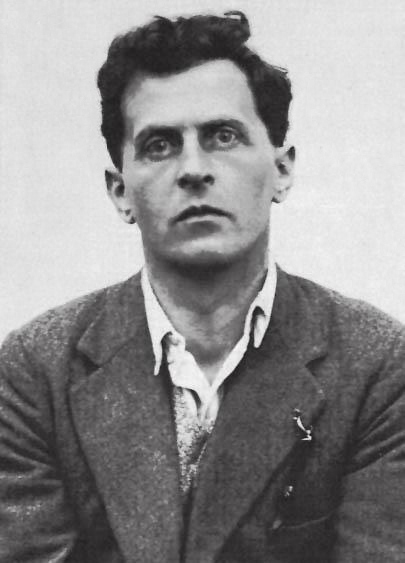
Hope was not a virtue in the pre-Christian world. But it is not a virtue for Ludwig Wittgenstein either. ‘Whoever lives in the present lives without fear or hope’, is one of his deep tautologies. In particular, one lives without the worst of all fears, of death: ‘Eternal life belongs to those who live in the present.’ This is because to ‘live in the present’ is to inhabit ‘a state of mind in which one is inclined to say, “I am safe, nothing can injure me whatever happens”’, a state to which he attributes ‘absolute value’. What Wittgenstein is talking about, it seems to me, is ataraxia – peace of mind, tranquillity, serenity, equanimity – a state of mind to which all the Hellenistic philosophers of life, the Stoics, Cynics, Sceptics and Epicureans, also attributed ‘absolute value’.
Wittgenstein thinks that ataraxia excludes hope: to hope is to ‘live in the future’ while ataraxia belongs only to those who ‘live in the present’. If ataraxia has ‘absolute value’ it follows that, for him, hope is not a virtue. Swimming as we now do in the turbulence of the internet, our need for peace of mind is rarely met. And so it is worth taking seriously Wittgenstein’s high assessment of its value. But do we really have to abandon hope to achieve it?
Lewis R Gordon’s essay observes that, for Buddhism, hope is not a virtue since to practise hope is to invest energy in an illusory self and world. The true self is not the ego but rather ‘being’ as such (which, from our point of view, is also ‘nothing’). It is not clear, however, that there is anything wrong with investing energy in an illusory world – actors do it all the time. This suggests the possibility of a duality of consciousness that combines ataraxia with hope. As the good actor becomes the character he or she portrays, so one can act with vigour and commitment on the stage of life. If, however, one subscribes to the illusory nature of the embodied self, at a deeper level, one simultaneously knows that the stage is a stage and that the events it depicts are ultimately fictional. And from this it follows that one is absolutely ‘safe’ in the face of those events, that ‘nothing can injure me, whatever happens’. One experiences, in other words, ataraxia. As the American philosopher Richard Rorty would call it, this ‘ironic’ state of mind, hopeful action combined with underlying detachment, has, it seems to me, much to recommend it. Combined with ironic detachment, hope is, after all, perhaps, a virtue.
Donate ← Back to the current issue